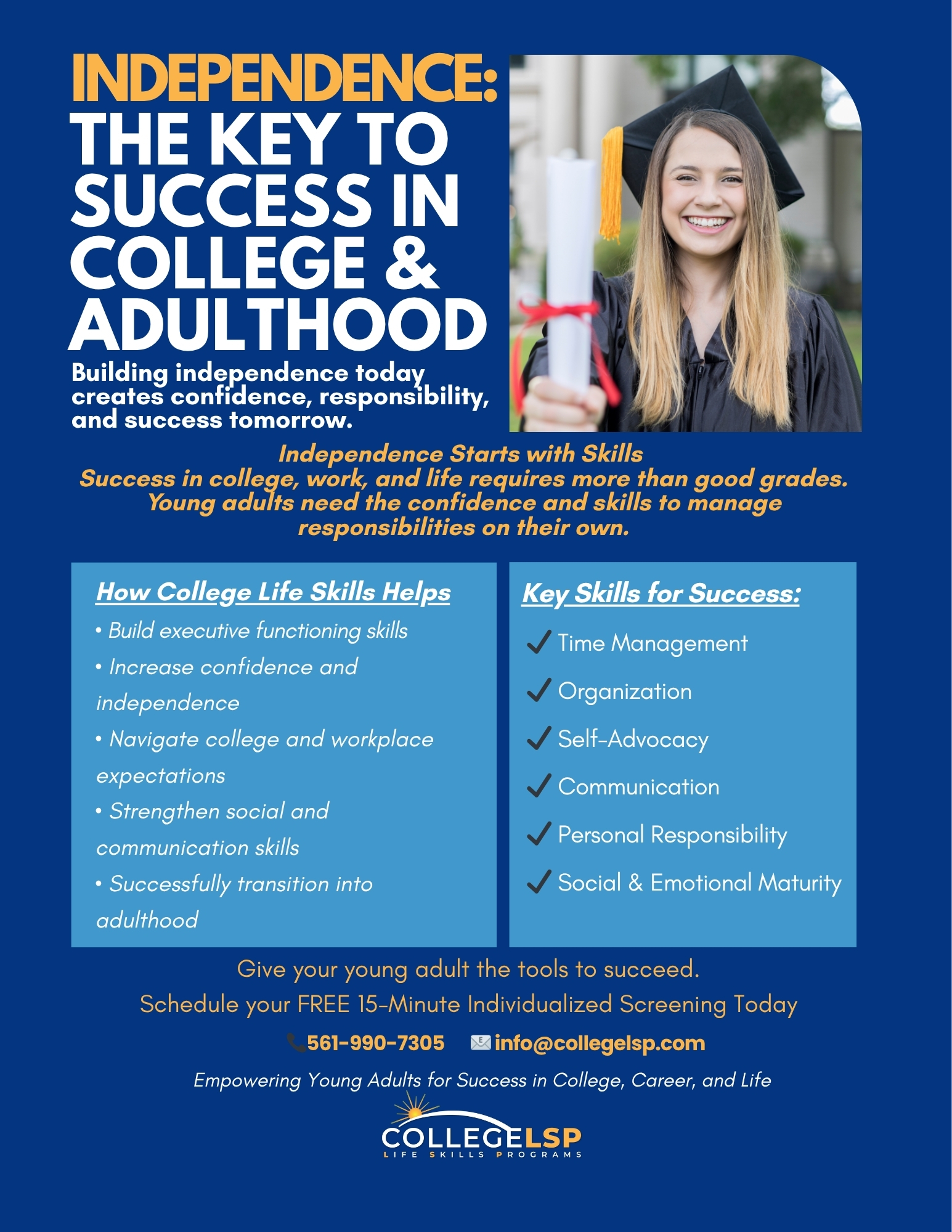
Every individual has something that makes them unique in a way that is also impactful on their life, however, this aspect can sometimes hinder a student’s ability to be college-bound. Characteristics such as ADHD, Autism, “Asperger’s”, learning disabilities and even “Giftedness” can make it difficult for a person to excel in an area such as education, which is why The Support For Students Growth Center has developed a program called the “College Life Skills Program” (CollegeLSP.com) to help those with various needs become prepared for higher-level education such as college.
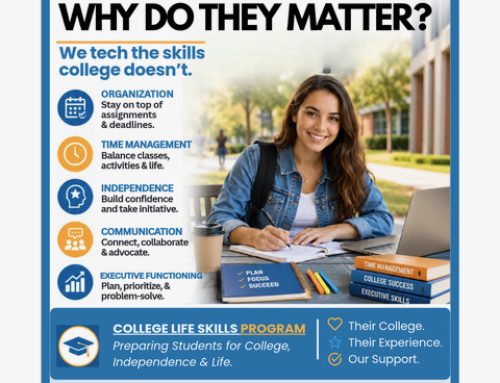
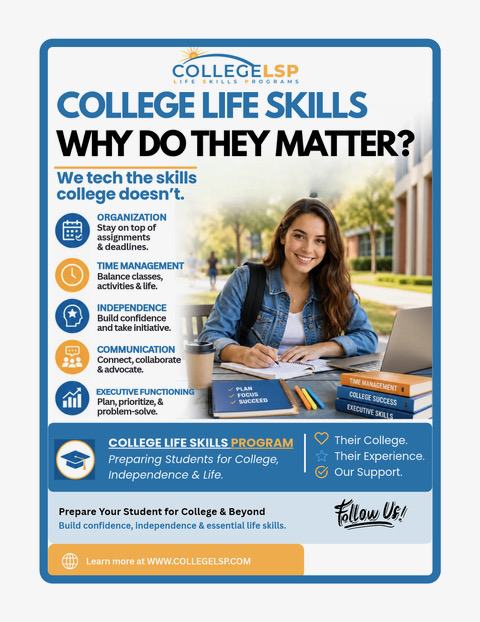
College drop–out rates as of 2021 are at 40% for undergraduate students while 5.1% of high schoolers are leaving before receiving a diploma, 36% of which have disabilities according to Melanie Hanson, a researcher at educationdata.org. Factors such as executive functioning can be to blame, seeing students who are having a hard in this category have trouble with impulse control, tantrums, difficulty self-regulating emotions, and a difficult time achieving independence and making plans for their futures (Harvard, 2021). The College Life Skills Program provides individualized services which aid with all of this and more, offering academic coaching for those who need it while also getting students to develop organizational skills to help balance school and life so the transition into independence isn’t as scary as it may seem.
Independent life skills and socialization challenges can be two main reasons a student with disabilities drop out of college or even high school since getting older means it is time to start doing things on your own. The inability to do certain tasks like taking care of personal belongings or hygiene, organization, managing their anxiety, socialization, keeping good money habits and time management, safe technology usage and developing confidence, communication skills and friendships are all hardships an individual with disabilities can face. Independent life and social trials and tribulations are ones that can be the most difficult to develop a desire to better oneself for, which is why the College Life Skills Program helps students learn and maintain these positive habits.
Immaturity also causes preparation for high school and college to become strenuous for those with various challenges since even society as a whole deems moving onto a higher education to be a hassle. The disability in and of itself can make it difficult for a child to understand the concepts of what it means to get older, such as personal boundaries, and adding the need to go to college or graduate high school can only expedite the issue. For those struggling in this area, dropping out rather than becoming independent is seen as an easier route, which is why the CollegeLSP has also developed a program to aid with such setbacks. Self-advocacy and regulation, anxiety and depression management, and the fear of “adulting,” isolation, and regulation are all difficulties addressed to help students seamlessly develop better habits to help them in the future.
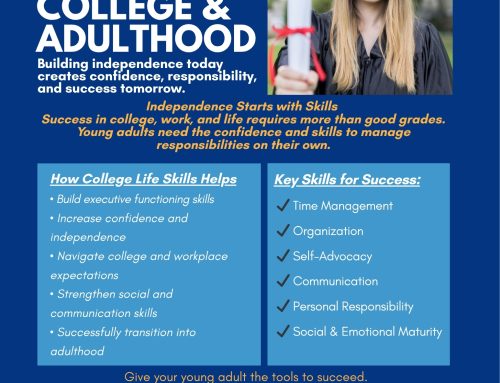
The College Life Skills Program helps those who need it integrate into independent life smoothly and efficiently to prevent drop out rates of students with disabilities from increasing. The program was developed in a way to make independence not seem so scary as the student is introduced to the world from a different view, creating a successful, happy, and educated member of society.
Dr. Eric J. Nach, Ph.D., M.Ed., A.S.D.C., is a Developmental and Behavioral Specialistwho specializes in Autism, ADHD and related disorders. Dr. Nach is the founder of the College Life Skills Program where he and his team of professional’s help develop the Emotional Maturity, Executive Functioning, Life Skill and Social Abilities of college students and those high school students preparing for college. The CollegeLSP is a subsidiary program of the Support For Students Growth Center, in Boca Raton, FL.
Hanson, Melanie. “College Dropout Rates” EducationData.org, September 14, 2021,
https://educationdata.org/college-dropout-rates
Hanson, Melanie. “High School Dropout Rate” EducationData.org, September 13, 2021,
https://educationdata.org/high-school-dropout-rate
Johanna Calderon, P. D. (2020, December 16). Executive function in children: Why it matters and how to help. Harvard Health. Retrieved October 24, 2021, from https://www.health.harvard.edu/blog/executive-function-in-children-why-it-matters-and-how-to-help-2020121621583.