Technology. Practically everyone this day and age uses it. You yourself are using a device to read this right now, which is perfectly fine, but it’s easy to forget to monitor how long we or our loved ones spend on one. Due to its normalcy, no one thinks twice about giving their child a screen to stare at. It’s an easy way for a parent to keep their kid entertained, but this can quickly become more harmful than most initially thought. Screen addiction can hinder youth from becoming the most successful person possible, which is why it is crucial to educate them about proper time and life balances as life itself becomes more engulfed by technology.
Tech dependence has the same effect as drug addictions according to numerous studies from the past decade and can cause emotional and behavioral issues such as depression, mood shifts and many other life hinderances that tend to be overlooked by society (Monroe, 2019, para. 1). 1,043 students between 18 and 30 years old were surveyed at King’s College London about screen addiction, and out of them, 406 (38.9%) displayed signs of addiction (Lovejoy, 2021, para. 3). From there, more than two-thirds (68.7%) reported that they experienced trouble sleeping compared to the 57.1% who were not addicted (Lovejoy, 2021, para. 4). As a result of their screen addiction, the students also claim they experience a feeling of distress if they were unable to control how long they spent on their devices, and neglect towards more meaningful aspects of their lives (Lovejoy, 2021, para. 5).
All these factors can damage a young adult’s ability to thrive, especially when living on their own, which is why it’s important for parents to ensure that they establish this balance in their lives. Worrying about your child is something that will never fade. A mother and father will always want nothing but the best for their kid and knowing that they can be affected by screen addiction is something that can spark that uneasiness, especially if that child experiences characteristics of “giftedness”, “Asperger’s”, ADHD, Autism, Learning Disabilities or other life challenges . Screen management can become hard even for an individual who doesn’t have “learning or life challenges”. However, those with them may find technology easier than facing the obstacles that life throws at them, which can lead to issues such as improper sleep, anxiety, depression, neglect for themselves and their responsibilities, and much more, and no parent wants that, which is why the CollegeLSP has developed an individualized program to prevent and treat screen addiction.
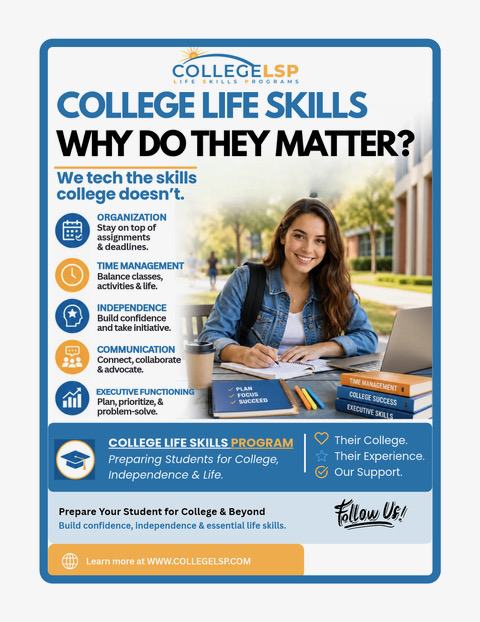
The College Life Skills Program is a program that prepares students between high school and college for the real world by teaching them important skills such as how to prevent, or get rid of, screen addiction. Parents do not want to worry about their child suffering from the mental and physical effects of technology, especially when it can be such an easy fix, and the CollegeLSP recognizes that. This time of transition between childhood and adulthood independence should be one that is lively and full of heartwarming, exciting experiences for all parties involved, and this program is the best way to ensure that.
CollegeLSP can teach your child how to balance their life. The screen addiction aspect of the life skills program isn’t intended to scare your child away from technology. Rather, it simply teaches them how to properly balance screen time with their social, academic, chore and overall life schedule so they do not become consumed by such an addiction. Making sure your child is safe, happy, and healthy is a parent’s job, and ensuring that they have all the life skills to succeed despite their challenges is the job of the Licensed Professional Counselors and Certified Special Education Teachers of the CollegeLSP.
Dr. Eric J. Nach, Ph.D., M.Ed., A.S.D.C., is a Developmental and Behavioral Specialist who specializes in Autism, ADHD and related disorders. Dr. Nach is the founder of the College Life Skills Program where he and his team of professional’s help develop the Emotional Maturity, Executive Functioning, Life Skill and Social Abilities of college students and those high school students preparing for college. The CollegeLSP is a subsidiary program of the Support For Students Growth Center, in Boca Raton, FL.
Monroe, J. (2021, June 1). Teens and tech: New research on the dangers of Screen Time. Newport Academy. Retrieved November 25, 2021, from https://www.newportacademy.com/resources/mental-health/technology-dependence/.
Lovejoy, B. (2021, March 2). Smartphone addiction affects 40% of college students, says study. 9to5Mac. Retrieved November 25, 2021, from https://9to5mac.com/2021/03/02/smartphone-addiction-sleep/.