Awkward conversation is something everyone experiences. Whether it be small talk with a coworker you have nothing in common with or someone who simply just doesn’t know how to end a conversation, it is apparent in most people’s lives. However, as your relationship with them grows, talking is supposed to flow much easier, but for some, the skills to achieve that comfortable balance are harder to gain. Conversational skills are important for everyone to evolve as they grow older. Friendships, partnerships, and jobs rely on a good conversational foundations, especially since more often than not jobs require some sort of customer service. Although positive conversational habits are mostly learned as an individual grows older, some need that extra bit of help to get there, which is why it is important for them to learn how to develop them sooner than later.
An individual not being able to maintain a conversation as easily as the next person can be due to a plethora of things. Anxiety, slower processing, impulsivity, trouble with language skills, and struggling with social skills are all reasons why both kids, as well as adults, tend to struggle with making conversation (Vierstra, 2021). Possessing poor conversational skills is nondiscriminatory. Anyone and everyone can be bad at maintaining something as simple as small talk, but for some, having ‘life challenges” such as Autism, Asperger’s, ADHD, etc. can make it even more difficult for an individual to learn proper conversational skills. Approximately 10% of students with ‘life challenges’ are affected by poor social and communicational skills (National Center for Learning Disabilities, 2020). Yet just because someone has a harder time than the next person when learning these techniques, it doesn’t mean they cannot develop them. It simply means that they require a little more help to do so, and the College Life Skills Program is the way to help teach your child how to maintain a conversation.
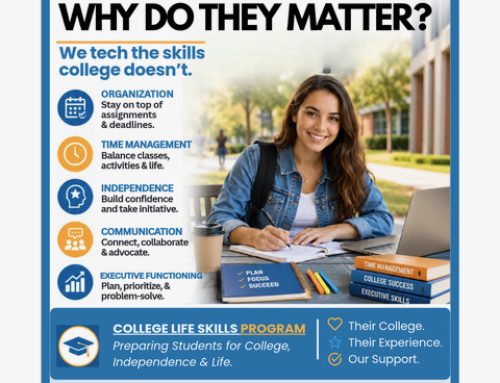
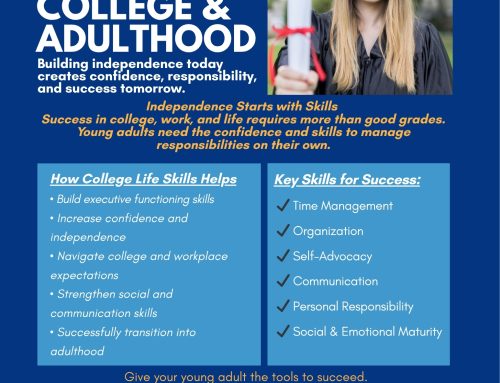
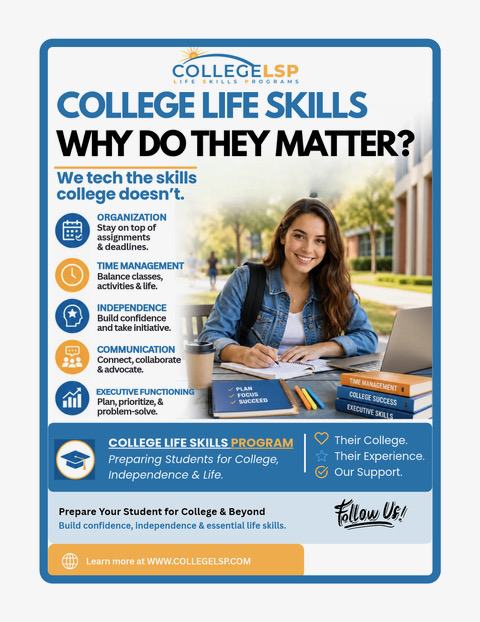
As someone gets older, it may be difficult to admit that they need help, especially in a category that is typically learned from watching and speaking to others around them. The CollegeLSP understands that and is a positive way to help show your child that this isn’t something to be ashamed of. Being able to keep and maintain positive conversational skills is crucial to a person’s ability to become the most functioning and successful individual that they are more than capable of becoming. No parent wants to fear if their child is getting their thoughts across, or if they are saying what they feel needs to be said, especially when they are off to a new place such as college, so it is important to teach them the ability to speak without worry. These skills help your child make and maintain friendships, gain job experience, not be ashamed of asking for help whether it be educational wise or health and happiness wise, and so much more, which is why if they need aid in developing a proper conversational foundation, The CollegeLSP is the way to do it.
Dr. Eric J. Nach, Ph.D., M.Ed., A.S.D.C., is a Developmental and Behavioral Specialist who specializes in Autism, ADHD and related disorders. Dr. Nach is the founder of the College Life Skills Program where he and his team of professional’s help develop the Emotional Maturity, Executive Functioning, Life Skill and Social Abilities of college students and those high school students preparing for college. The CollegeLSP is a subsidiary program of the Support For Students Growth Center, located in Boca Raton, FL and providing services nationwide.
NCLD disproportionality trends and actions for impact final. (n.d.). Retrieved December 26, 2021, from https://www.ncld.org/wp-content/uploads/2020/10/2020-NCLD-Disproportionality_Trends-and-Actions-for-Impact_FINAL-1.pdf
Vierstra, G. (2021, March 29). Trouble making conversation: Why it happens. Understood. Retrieved December 26, 2021, from https://www.understood.org/articles/en/trouble-making-conversation