It’s no secret that life can seem overwhelming. At times, we can feel like every little thing in our lives can be building up and up, causing us to feel distressed. Then, to no surprise, we can lash out because of all these emotions, even when we don’t mean to, which is why being able to self-monitor our emotions and behaviors is so important, especially in college. College is the type of place where you feel as if you have so much to do, but not enough time to do it, causing young adults to have heightened anxiety and negative emotions in return. However, since you are in such a social place, you are constantly around people, and therefore must be aware of how your actions affect your environment. Whether it’s being in the dorm with your roommate or hanging out with classmates, friends or family, it is important to be aware of how you are impacting others. Yet, for those with life challenges such as ADHD, Autism, “Asperger’s,” anxiety or social challenges, etc., it can be difficult to do so.
Although our environment can sometimes be the cause of the way we are feeling, having well-developed self-monitoring skills can aid in the process of reacting appropriately. Being aware that you can’t scream and yell at your roommate when they upset you or are getting too loud and rowdy at a party that is supposed to be more relaxed, are ways young adults show they are conscious of their behavior as well as the social environment they are in. Being able to self-monitor doesn’t only pertain to social situations though. School work and completing tasks are another way this skill can help young adults succeed in independent life, since when it comes to those with life challenges, “this lack of self-control may interfere with their ability to perform cognitive or everyday tasks.” (Furfaro, 2018). When talking to a client, they told me about how they would allow their environment to constantly distract them from their schoolwork. Instead of excluding themselves from the talk and socializing of their roommates when needing to get work done, they would allow themselves to become fully sidetracked, piling up work in the process. From there, they would become more and more agitated and anxious as the workload became larger and larger, stressing them out before lashing out at their friends and others. Although they didn’t mean to, they did, showing that sometimes they needed to be more aware of their environment and their response to it. Being able to self-monitor when they are getting too distracted or upset allowed them to handle the situation before it became too drastic, making their transition into college life easier.
Presenting yourself in a certain way can also be difficult without well-developed self-monitoring skills since being overwhelmed can sometimes leak out and into our body language, and for college students, it’s not an uncommon emotion. According to a quote in a cited source, “[Life challenged] students becoming overwhelmed is “a huge problem,” Greenburg says…The problem for parents is that when their kids reach college age, they don’t want to hear from you, and they don’t realize how dysregulated they’re becoming. They may end up back home, having dropped out of college.” (Arky, 2022). Their child dropping out is the last thing a parent wants. They want their child to succeed as an independent young adult, to have fun in college, get an education, be healthy and get a job or preferably a career, but not having adult-level self-monitoring skills can prevent that. If a young adult is unable to self-monitor appropriately, they can have a hard time completing tasks and goals, socializing, and overall living on their own, therefore making them want to run back home where everyone understands or at least will tolerate them, and they can avoid dealing with this issue. This for any parent, and even the young adult sounds like a nightmare, but developing the proper skill sets to surpass this and self-monitor sufficiently on their own can be achieved with the help of the College Life Skills Program.
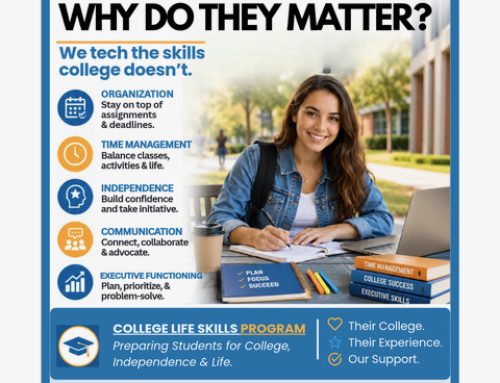
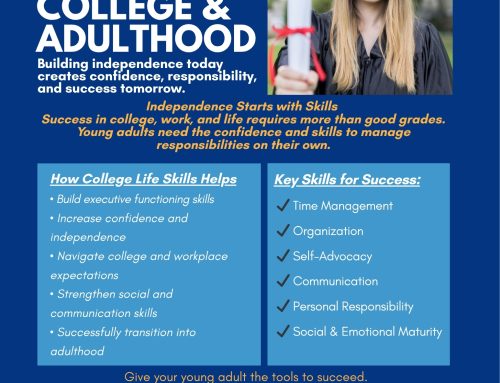
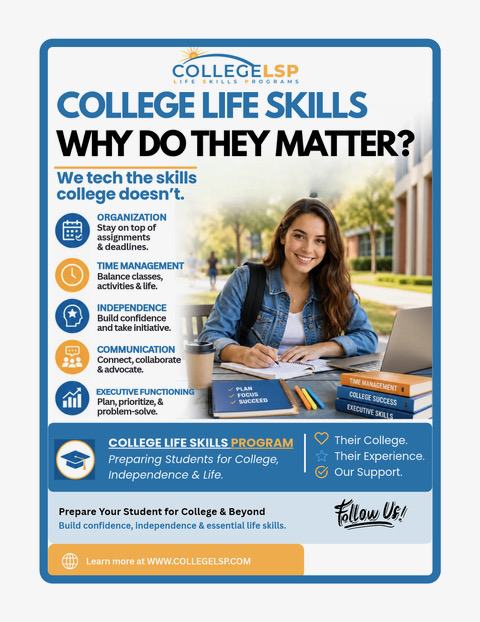
At CollegeLSP, we professionally coach those who are college bound, in college, and after college develop the skills needed to successfully function in independent life. Our team of Doctoral and Master level professionals uses our individualized, proprietary, evidence-based approaches developed with the real-life experience of thousands of students over three decades to aid young adults in their journey to independence. So, if your young adult is having trouble achieving adult-level self-monitoring skills, CollegeLSP is more than qualified to help.
Dr. Eric J. Nach, Ph.D., M.Ed., A.S.D.C., is a Developmental and Behavioral Specialist who specializes in Autism, ADHD and related disorders. Dr. Nach is the founder of the College Life Skills Program where he and his team of professional’s help develop the Emotional Maturity, Executive Functioning, Life Skill and Social Abilities of college students and those high school students preparing for college. The CollegeLSP is a subsidiary program of the Support For Students Growth Center, located in Boca Raton, FL and providing services nationwide.
Arky, B. (2022, July 12). Going to college with autism. Child Mind Institute. Retrieved September 29, 2022, from https://childmind.org/article/going-to-college-with-autism/#becoming-overwhelmed
Furfaro, H. (2018, May 29). Special interests hinder self-control in children with autism. Spectrum. Retrieved September 29, 2022, from https://www.spectrumnews.org/news/special-interests-hinder-self-control-children-autism/