But it’s summer…
After all the exams, papers, and final things that needed to be done at the end of the semester, one young man found himself ready to go home for the summer and relax, but he didn’t realize the social toll it was going to take on him. Growing up, retaining information such as academics was never hard for him. He would have winter, spring, and summer break and come back just as educated as he left, but what neither he nor his family realized was how the “Summer Slide” would also affect his ability to interact socially with his peers and others.
When in high school, many of his peers he would see during the school year would still be around during the summer, but when in college, he met people from all around the U.S., none of which lived anywhere near him. Despite trying to make time to text and call, his friends who had come home for the summer and his friends who were now in different states were busy with work, family, or other things, so their communication became much more limited than it was in college. This young man also found that even when they did have time to call, it was not the same for him. There was no eye contact or social cues to read, so he found it too hard to socialize via technology or the internet, so eventually, he just started spending more and more time in his room, alone, and with minimal outward contact.
This change in behavior suddenly worried the young man’s parents because, during the school year, they had worked so hard to get their child out and into the social world. He learned how to become confident and go to school events, talk to people he didn’t know, and even go to some parties with his new friends/peers, but now that he was home, he was seemingly forgetting those social skills. Instead, he became anxious and isolated, making his parents realize that “Summer Slide” doesn’t only affect academic knowledge, but social abilities as well.
When it comes to summertime, it is not uncommon for students to regress in their social skill development. At home, college students most likely now have their own room again, their own space, and fewer responsibilities than they had while away, but they also have less freedom. Not practicing adult-level independence daily anymore can cause college students to fall back into their old habits, and usually when they go back to college, they can just adapt again with even more ease than before, but for those with neurodivergent traits, this can be more difficult for them to do. According to one source, “For many…, those social learning opportunities greatly diminish during the summer school break. Once out of the school environment and routine, [they] may spend more time alone or engaged in digital entertainment/communication, which research has shown may interfere with [their] ability to recognize emotions in the people around them…” (childsuccesscenter, 2018). Not having to physically be around people like you do in college can easily cause them to forget how it is to be constantly socializing, even if it is as simple as passing another person on the way to the dining hall. This change in routine can lead students to forget how to properly handle things on their own or remember to look at someone when they are speaking, respect boundaries, manage their own time, money, and day on their own, and so much more, and especially for college students, this can be challenging.
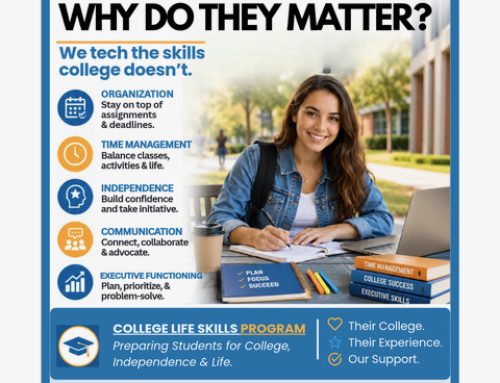
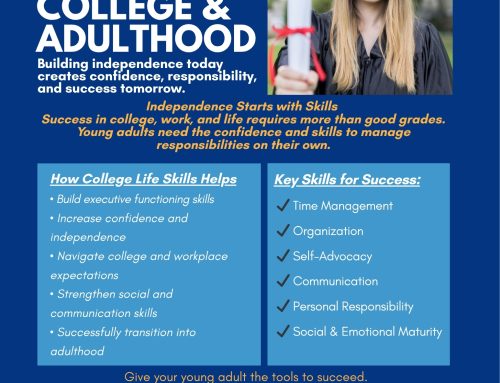
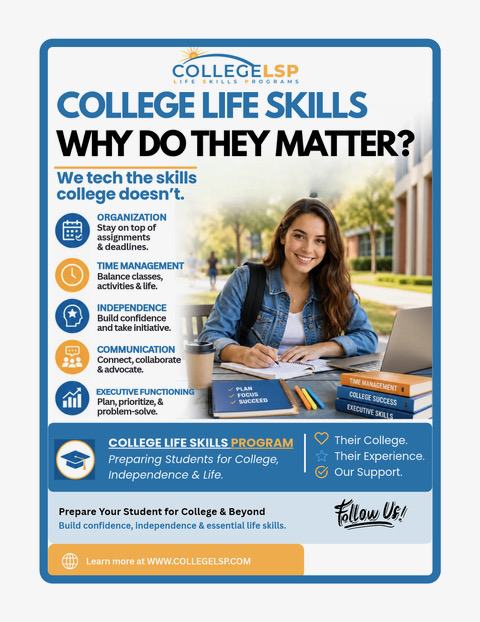
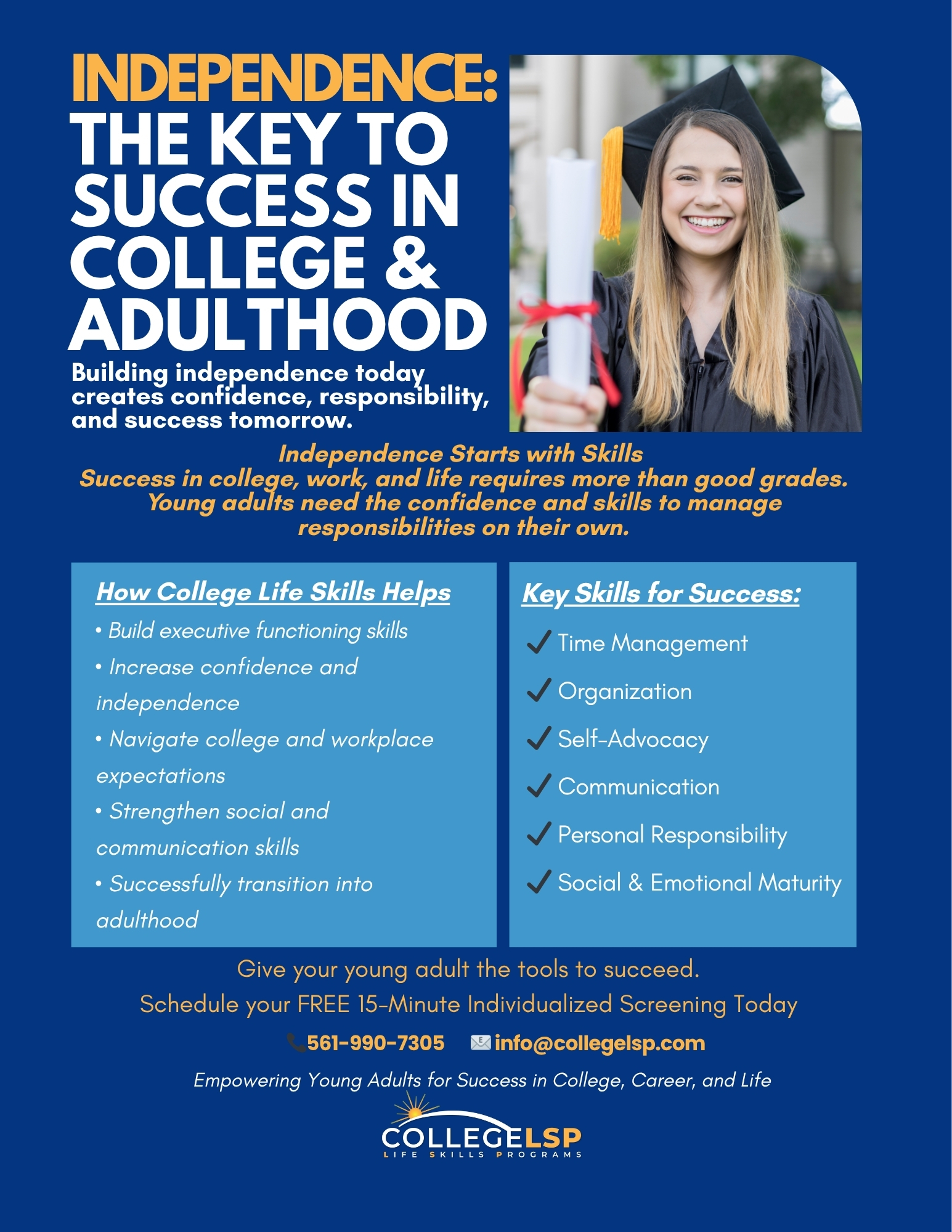
Jumping back and forth from being completely on your own to having your parents micromanage you again can make it hard for them to adapt again when the fall semester comes back around. One source explains that “The long summer vacation breaks the rhythm of instruction and leads to forgetting…” (Cooper, n.d.). For those with neurodivergent traits, this constant back and forth can be stressful for them. They may feel that right when they are getting the hang of adult level socializing, independence, and college, they are leaving again. This constant shifting may eventually lead to them want to drop out, since if they do, they won’t have to leave again. No parent wants their child to drop out, which is why it is so important to ensure they are practicing said skills even over the summer, which is why the College Life Skills Program has developed in person and virtual, independent and group programs to help them not only continue to practice but strengthen these skills.
At the College Life Skills Program, our team of Doctoral and Master level professionals utilizes a series of services and techniques to help young adults who are college bound, in college, and even after college succeed in and after their transition into independent life. We help teach them life skills such as avoiding the “Summer Slide,” in the work world and in life to help them learn how to balance independent life on their own, as well as executive functioning skills, social skills, and development of emotional maturity. If your young adult is struggling with life skills, such as being able to still practice social skills or the transition into adulthood, CollegeLSP has the tools to aid them in achieving such skills.
Dr. Eric J. Nach, Ph.D., M.Ed., A.S.D.C., is a Developmental and Behavioral Specialist who specializes in Autism, ADHD and related disorders. Dr. Nach is the founder of the College Life Skills Program where he and his team of professional’s help develop the Emotional Maturity, Executive Functioning, Life Skill and Social Abilities of college students and those high school students preparing for college. The CollegeLSP is a subsidiary program of the Support For Students Growth Center, located in Boca Raton, FL and providing services nationwide.
Cscadmin, By, & Cscadmin. (2018, July 11). Summer slide and your child’s social skills. Child Success Center. Retrieved April 24, 2023, from https://childsuccesscenter.com/social-skills/summer-slide-and-your-childs-social-skills/
Cooper, H. (n.d.). Summer learning loss: The problem and some solutions. LD OnLine. Retrieved April 24, 2023, from https://www.ldonline.org/ld-topics/teaching-instruction/summer-learning-loss-problem-and-some-solutions#:~:text=One%20concern%20is%20that%20children,to%20school%20in%20the%20fall.