But I just have too much to do…
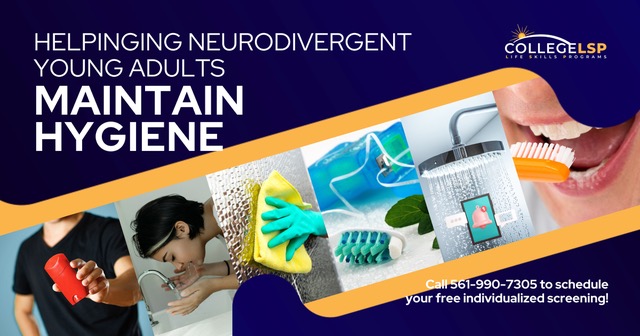
For one neurodivergent young man, maintaining proper hygiene while away at college was becoming increasingly more difficult with each day. As classes became more stressful, he found himself sleeping in as much as possible in the morning before attending classes. This then caused him to have less time, if any at all, to shower, brush his teeth, put on deodorant, and do other general hygiene necessities in the morning, all of which led him to smell.
Although this did not bother the young man at first, it bothered his roommate who continued to ask the young man to “keep up with himself”, but as he continued not to do so, his roommate began spending less and less time with him, as did his other friends and peers. As time went on, his poor hygiene habits led him to become isolated since none of his peers liked to sit next to him in class or in the dining hall, and as time went on, the young man quickly became resentful of college. He felt as if it was ruining his social life, and as he expressed wanting to drop out, his parents reached out to The College Life Skills Program for help.
There, he met with a coach weekly so he could strengthen these skills by learning and applying strategies such as setting alarms to remind him to shower, brush his teeth, etc. He began to run on a schedule to help him remember and be consistent with these daily necessities, along with other techniques to try and learn how to maintain his hygiene at an adult level. As he received this coaching, with a level of accountability, his ability to handle independent life flourished, preventing him from being running away from college due to his poor ability to manage his hygiene and other needs.
In college, life is stressful, especially for neurodivergent individuals. Sometimes young adults feel like they don’t even have the time to breathe, more or less take a shower, wash their face, and do everything else that needs to get done in a day. Yet, if they do not, then it can negatively impact their social life and how they feel about themselves.. Most people do not want to hang out or be associated with someone who smells or does not keep up with their daily hygiene, causing them to become isolated in return. This can then make college even more stressful for them, but this skill is important in different environments as well. Making sure you are presentable at work and in daily life in general is important for young adults to do, because if not, they may struggle to socialize in those situations as time goes on.
Poor hygiene can impact their living environment as well. If a young adult has trouble with this skill, they may find it difficult to keep their rooms, apartments, and other spaces clean, which can then add to the stress in their lives. They be unable to find things because of their poor organization, and their friends may not want to come over because of the smell, mess, etc. When it comes to maintaining a clean lifestyle independently, a study explains how “According to recent survey data from the American Cleaning Institute (ACI) and Wakefield Research, almost three in four students (72%) are less than completely prepared to do their own cleaning when first arriving to college.” (CMM, 2022). With so many young adults struggling to keep their environment clean on their own, it’s no surprise that maintaining a hygienic lifestyle can be difficult. If young adults allow their room to get to that type of state, it can take a toll on not only their physical health such as body odor, but their mental one as well. Another source explains that “…92% of college students recognize that they are at their best physically and mentally when their room is clean…” (Collins, 2022.). With such impacts, it is important that young adults learn how to implement this skill in their daily lives, and CLSP has the ability to help them learn how to do so.
At the College Life Skills Program, our team of Doctoral and Master level professionals utilizes a series of highly individualized strategies, services, and techniques to help neurodivergent young adults who are college bound, in college, and even after college succeed in and after their transition into independent life. We help teach them life skills such how maintain their hygiene so they can be successful in the work world and in life as well as help them learn how to balance independent life on their own, and other executive functioning skills, social skills, and emotional maturity. If your young adult is struggling with certain skills, such as maintaining their hygiene on their own or the transition into college and adulthood, CollegeLSP has the tools to aid them in achieving and generalizing such skills.
Click here and call now to schedule your FREE 20-minute individualized screening
Dr. Eric J. Nach, Ph.D., M.Ed., A.S.D.C., is a Developmental and Behavioral Specialist who specializes in Autism, ADHD and related disorders. Dr. Nach is the founder of the College Life Skills Program where he and his team of professional’s help develop the Emotional Maturity, Executive Functioning, Life Skill and Social Abilities of college students and those high school students preparing for college. The CollegeLSP is a subsidiary program of the Support For Students Growth Center, located in Boca Raton, FL and providing services nationwide.
College students’ cleaning confidence fails to make the grade. Cleaning & Maintenance Management. (2022, August 2). Retrieved January 9, 2024, from https://cmmonline.com/news/college-students-cleaning-confidence-fails-to-make-the-grade#:~:text=According%20to%20recent%20survey%20data,when%20first%20arriving%20to%20college.
Collins, L. M. (2022, September 12). How cleaning helps young adults launch. Deseret News. Retrieved January 9, 2024, from https://www.deseret.com/2022/9/11/23329232/how-cleaning-helps-young-adults-launch-college-roommates