So…am I an adult or not?
Last year for winter break, Ben came home from college, and instead of being treated like the independent young adult he now was, his mother still treated him like a child. He had a bedtime, a strict chore schedule he now had to follow, and was expected to do everything their way, despite creating his own system while away. This then caused Ben to become extremely frustrated. While away, his mom expected him to do everything himself. She didn’t make him a chore chart or call him and check if he was home and in bed at a certain time. Instead, he was able to do things his way, and now that he was home for the winter break, he realized he didn’t like having to completely switch from what he was used to.
As his mother continued to treat Ben like he was in high school, he began having difficulty regulating his emotions. He would yell and throw things when being told and reminded what to do repeatedly, and as time went on, he isolated himself. He no longer wanted to go on family outings, watch movies with his family, or even sit down to dinner with them. As this continued to get worse, his mom reached out to the College Life Skills program for help.
There, they met with a coach weekly so they could try and figure out a way to make them both happy when Ben came home for the break. They both learned how to not only voice their concerns, but compromise on the issues they were having. Creating a chore chart together, discussing things rather than being told what to do, and understanding that her child is now an adult (and despite that she will always be his mother) allowed for them to be able to both be happy when Ben retuned from college. As they received this coaching, with a level of accountability, their ability to manage these changes made the transitioning process far less difficult.
Coming home from college during the winter break can be more difficult than some realize. While a lot of the time parents and their young adults are happy that they are together again, the sudden change in routine can make it hard for them to adjust. Young adults are used to their freedom by then. Coming and going as they please, staying up as late as they want, doing chores when they feel like it, and more can conflict with the way parents are used to running things. They may want to tell their child to follow all the same rules as before they went to college, which can cause conflict. Emotional dysregulation, anxiety, frustration and more can happen when a young adult is suddenly treated as a little kid again. This is why it is important that when they come home, there is a balance.
Agreeing together on when they need to be home, when chores need to be done, what days they can sleep in, allowing them to continue being independent, etc. can help when handling the transitions to and from college. It still enables them to utilize their independence while also not getting to do whatever they please, creating balance for both the young adult and their parents. This can then prevent outburst, isolation, and more they won’t feel as if they are constantly bouncing back and forth from being independent to dependent, which can make the transition from home and school significantly harder. At the College Life Skills Program, we help families and their young adults be prepared for these moments.
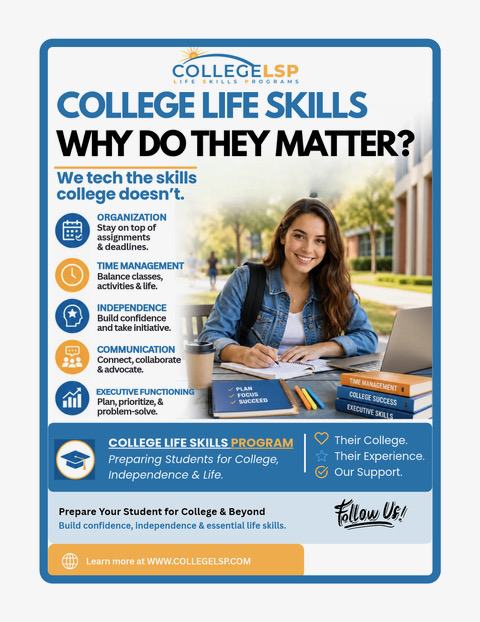
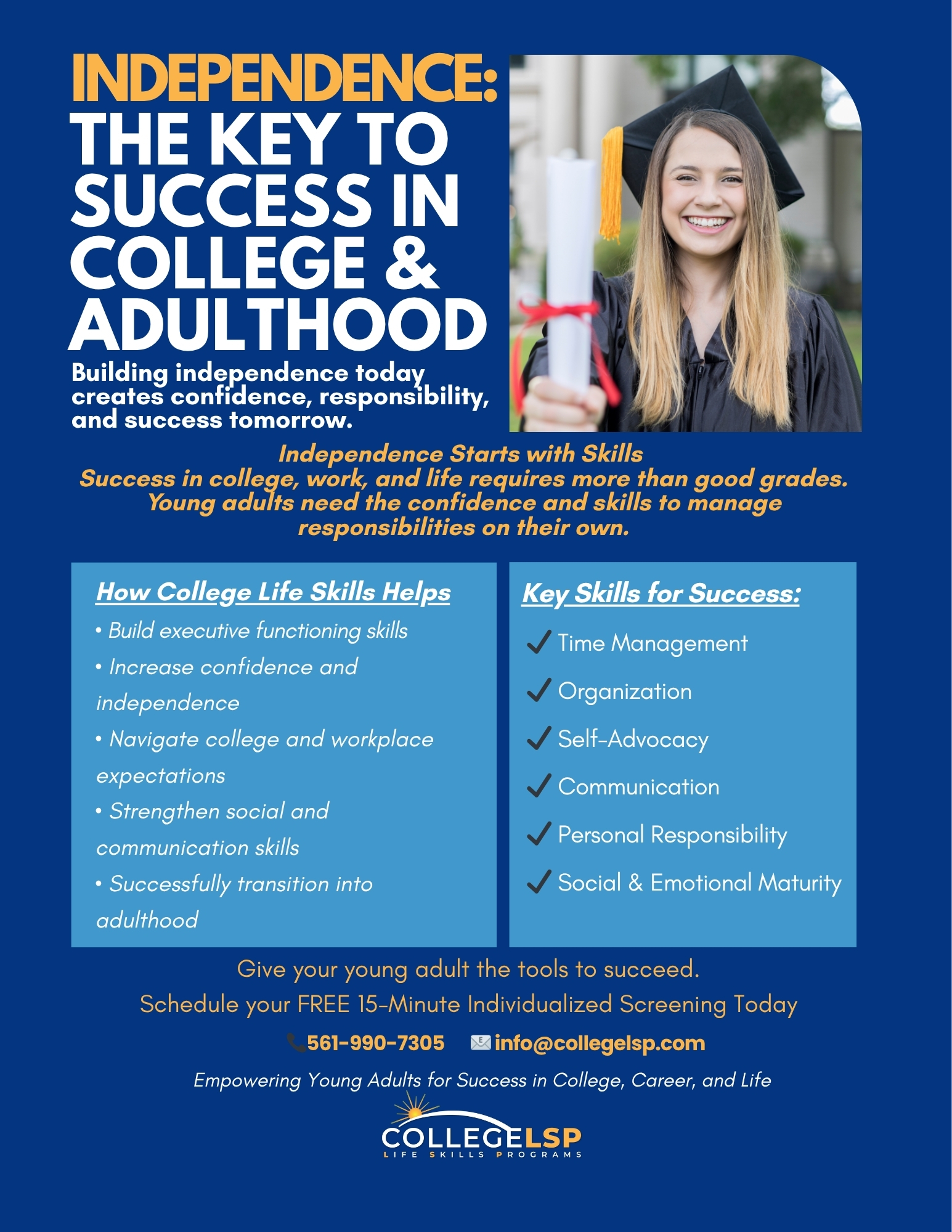
At the College Life Skills Program, our team of Doctoral and Master level professionals utilizes a series of highly individualized strategies, services, and techniques to help young adults who are college bound, in college, and even after college succeed in and after their transition into adult life. We help teach them skills so they can be successful in the work world and in life as well as help them learn how to balance independent life on their own, and other life skills, executive functioning skills, social skills, and emotional maturity. If your young adult is struggling with executive skills or the transition into college and adulthood, CollegeLSP has the tools to aid them in achieving and generalizing such skills.
Click here and call now to schedule your FREE 20-minute individualized screening.
Dr. Eric J. Nach, Ph.D., M.Ed., A.S.D.C., is a Developmental and Behavioral Specialist who specializes in Autism, ADHD and related disorders. Dr. Nach is the founder of the College Life Skills Program where he and his team of professional’s help develop the Emotional Maturity, Executive Functioning, Life Skill and Social Abilities of college students and those high school students preparing for college. The CollegeLSP is a subsidiary program of the Support For Students Growth Center, located in Boca Raton, FL and providing services nationwide