Admitting you need help is always said to be the hardest part of bettering yourself. No one likes to admit that they are currently incapable of doing something on their own, yet it always seems like everyone has something they need to work on. Asking for assistance should never be something to be afraid of. In reality, being able to realize you require some sort of external help shows how driven you are to become the best person possible, but society tends to misconstrue that. The fear that everyone around us will think less of our abilities is a factor that tends to hold an individual back from seeking help, but that is what hinders their ability to thrive in life. For some, life is a bit more difficult than for others. For individuals with ‘life challenges’ such as ADHD, Asperger’s, Autism and Learning Differences a little extra guidance is crucial to their balance in life and is why it is important to teach them that asking for help when needed is okay.
Compared to adults without ‘giftedness,’ about 32.9% with such ‘life challenges’ reported experiencing more emotional distress (CDC, 2020). This can cause many factors of life to become more strenuous for the person not only socially and emotionally, but academically as well. 75% of college students are reluctant to seek help, therefore causing a higher rate of dropouts and poor academic performance (Mayo Clinic, 2021). Despite not all academic decline being a result of the inability to grasp a subject, tutoring seems to be another factor that students shy away from. Feeling as if you’re not smart enough is always a fear in the back of a college student’s mind, especially when working towards your dream, which is why getting help can sometimes become taboo, and only gets worse as an individual grows older. Only 17.76% of students utilized online tutoring while 28.39% used group tutoring, and of the group percent, 31.74% were 19 or younger while only 15.87% were 30 or older (Businesswire, 2018). This idea that we should be more knowledgeable as we get older is what’s hindering students today, especially when transitioning into college life. Virtually everyone in their late teens and early 20s believes they know everything, so when they feel as if they may need help, their ego can become a little bruised. However, this is something not to be ashamed of, and for some, is necessary to have a happy life.
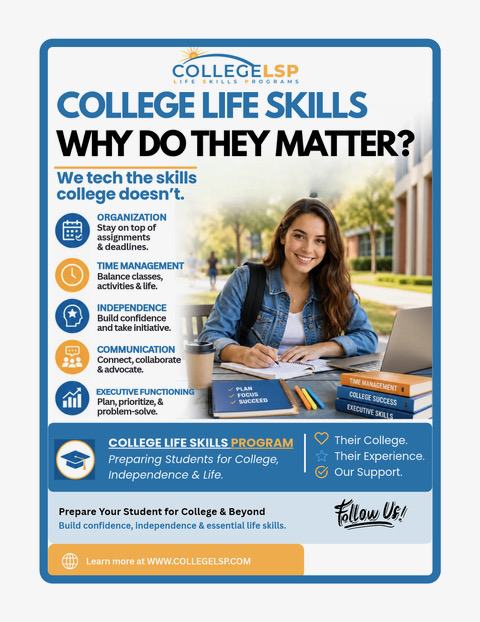
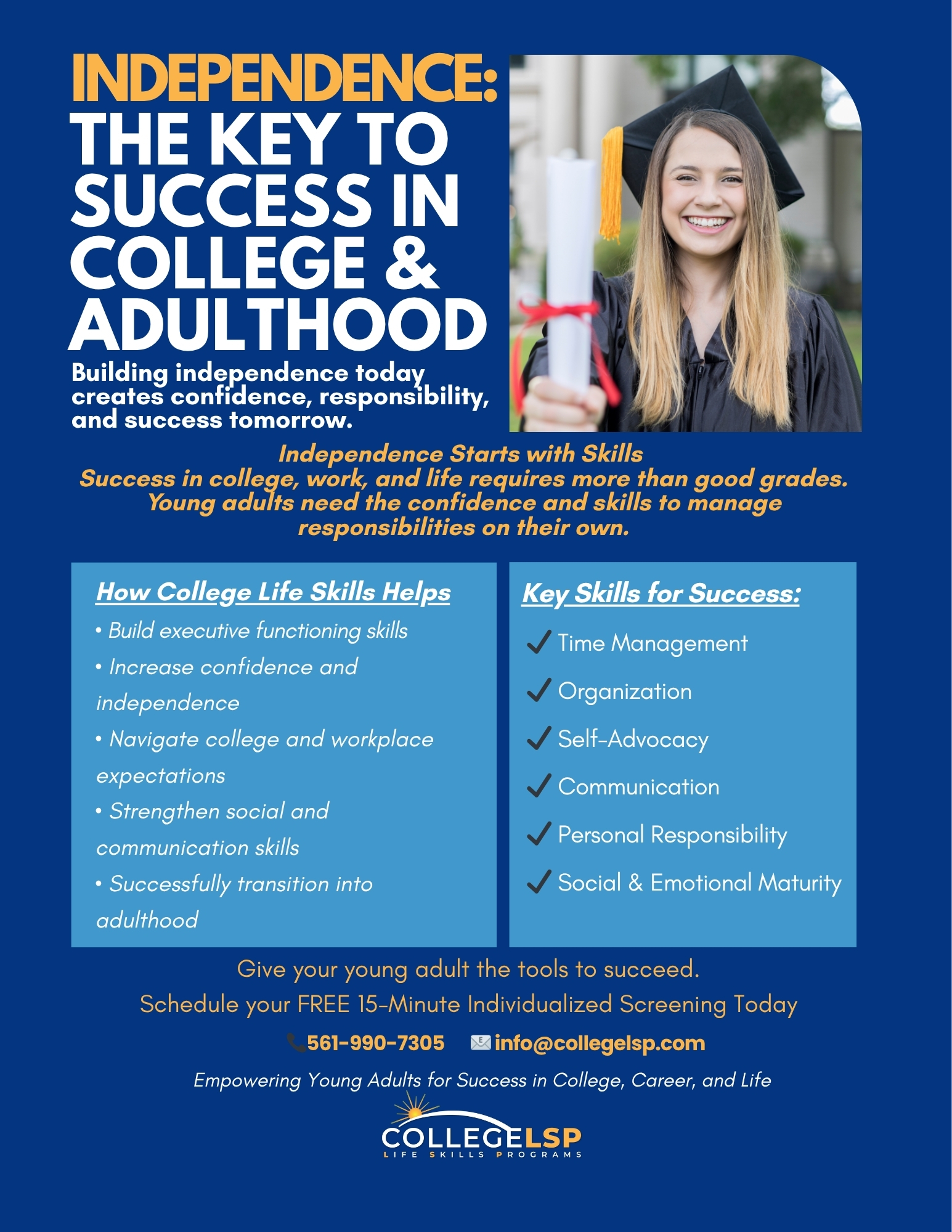
The College Life Skills Program is one of those tools that are there to help. In college, you will not be able to monitor every part of your child’s life to make sure they are getting the guidance they need, which is why the CollegeLSP developed a program under life in order to teach them how and when to seek assistance. It is crucial to know help can be needed in many forms, whether it be mentally, academically, and/or physically, and the life skills program is equipped to help your child recognize the difference before taking the necessary steps to seek out the assistance that they need when becoming independent. The CollegeLSP allows your child to feel as if they are in a judge-free zone when learning such important life skills and can feel comfortable when asking for this guidance even before they get used to it, and before they know it, they will be able to identify when and how to seek help for all their needs.
Dr. Eric J. Nach, Ph.D., M.Ed., A.S.D.C., is a Developmental and Behavioral Specialist who specializes in Autism, ADHD and related disorders. Dr. Nach is the founder of the College Life Skills Program where he and his team of professional’s help develop the Emotional Maturity, Executive Functioning, Life Skill and Social Abilities of college students and those high school students preparing for college. The CollegeLSP is a subsidiary program of the Support For Students Growth Center, located in Boca Raton, FL and providing services nationwide.
Centers for Disease Control and Prevention. (2020, September 10). Many adults with disabilities report frequent mental distress. Centers for Disease Control and Prevention. Retrieved January 11, 2022, from https://www.cdc.gov/ncbddd/disabilityandhealth/features/adults-with-disabilities-mental-distress.html
Survey of American college students, use of & satisfaction with college tutoring services, 2018 – researchandmarkets.com. Survey of American College Students, Use of & Satisfaction with College Tutoring Services, 2018 – ResearchAndMarkets.com | Business Wire. (2018, April 13). Retrieved January 11, 2022, from https://www.businesswire.com/news/home/20180413005463/en/Survey-of-American-College-Students-Use-of-Satisfaction-with-College-Tutoring-Services-2018—ResearchAndMarkets.com
College students and Depression. Mayo Clinic Health System. (n.d.). Retrieved January 11, 2022, from https://www.mayoclinichealthsystem.org/hometown-health/speaking-of-health/college-students-and-depression