I can’t, I’m too stressed out…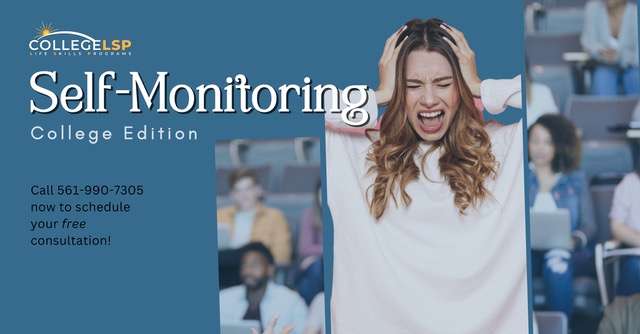
For one neurodivergent young woman, self-monitoring was one of the most difficult executive functioning skills for her to maintain while in college. Everything felt too stressful, exciting, or overwhelming, causing her to constantly lash out at her roommate or become too loud at social events that needed her to be a bit quieter and calmer, like her club meetings. She felt as if her emotions were running her everyday life, making it difficult for her to keep up with class, work, and her social life. The young woman worried too much about her being unable to self-monitor because of her executive dysfunction that instead of going out and trying to strengthen these skills, she locked herself in her room, and when she did come out, she had a hard time making sure she responded to her roommate in an appropriate way. Yet, the young woman’s roommate knew that it wasn’t her that was causing her roommate to lash out, but her stress from being unable to monitor and react appropriately to her own emotions, so she got in touch with her roommates’ parents for help.
After hearing about their neurodivergent daughters struggles, the parents reached out to The College Life Skills Program. There, she met with a coach weekly so she could learn how to strengthen these executive functioning skills by learning and applying strategies such as implementing a daily system where she took five minutes to process what emotions she was feeling and a notebook where she kept her daily tasks that needed to be done to prevent her poor self-monitoring from affecting her school life as well. As she received this coaching, with a level of accountability, her ability to handle independent life flourished, preventing her from dropping out of college due to the stress of poor self-monitoring skills.
College is a stressful place to be. How we are feeling can change on a whim, and since many young adults are in an environment that may be new or unlike their home, managing these emotions can be difficult. However, self-monitoring skills are what help us balance these emotions. Knowing how to prevent yourself from yelling at your roommate when they upset you or are taking a breather to avoid getting too stressed out in a class where you may be struggling, are ways young adults show they are aware of their behavior as well as the social environment they are in. Being able to self-monitor is important in other situations as well, not just social. School work and independent life rely on this executive functioning skill since “this lack of self-control may interfere with their ability to perform cognitive or everyday tasks.” (Furfaro, 2018). Without it, young adults may be more prone to let either their emotions or outside things distract and prevent them from working on what is important in that moment, making independent life more difficult for them as a result.
Self-monitoring is also used daily to prevent young adults from becoming overwhelmed with their newly found independence. Adult life has its ups and downs, but for some, the transition can be difficult for them, and if they have executive dysfunction, maintaining adult level self-monitoring skills can be extremely difficult. According to a quote in a cited source, “[Neurodivergent] students becoming overwhelmed is “a huge problem,” Greenburg says…The problem for parents is that when their kids reach college age, they don’t want to hear from you, and they don’t realize how dysregulated they’re becoming. They may end up back home, having dropped out of college.” (Arky, 2022). Dropping out because they cannot handle the stress of adult life isn’t uncommon for college students, especially if they cannot self-monitor. Without this executive functioning skill, neurodivergent young adults may find themselves drowning in their emotions in many situations, whether it be socially, academically, or in independent life since they cannot adapt to the situation properly. Yet, this skill isn’t impossible for them to learn.
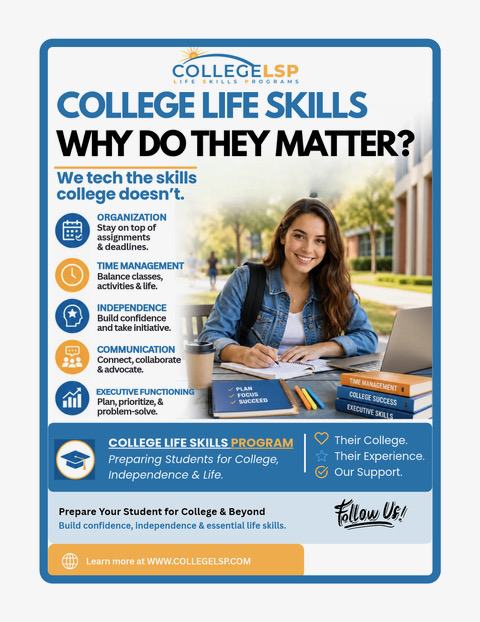
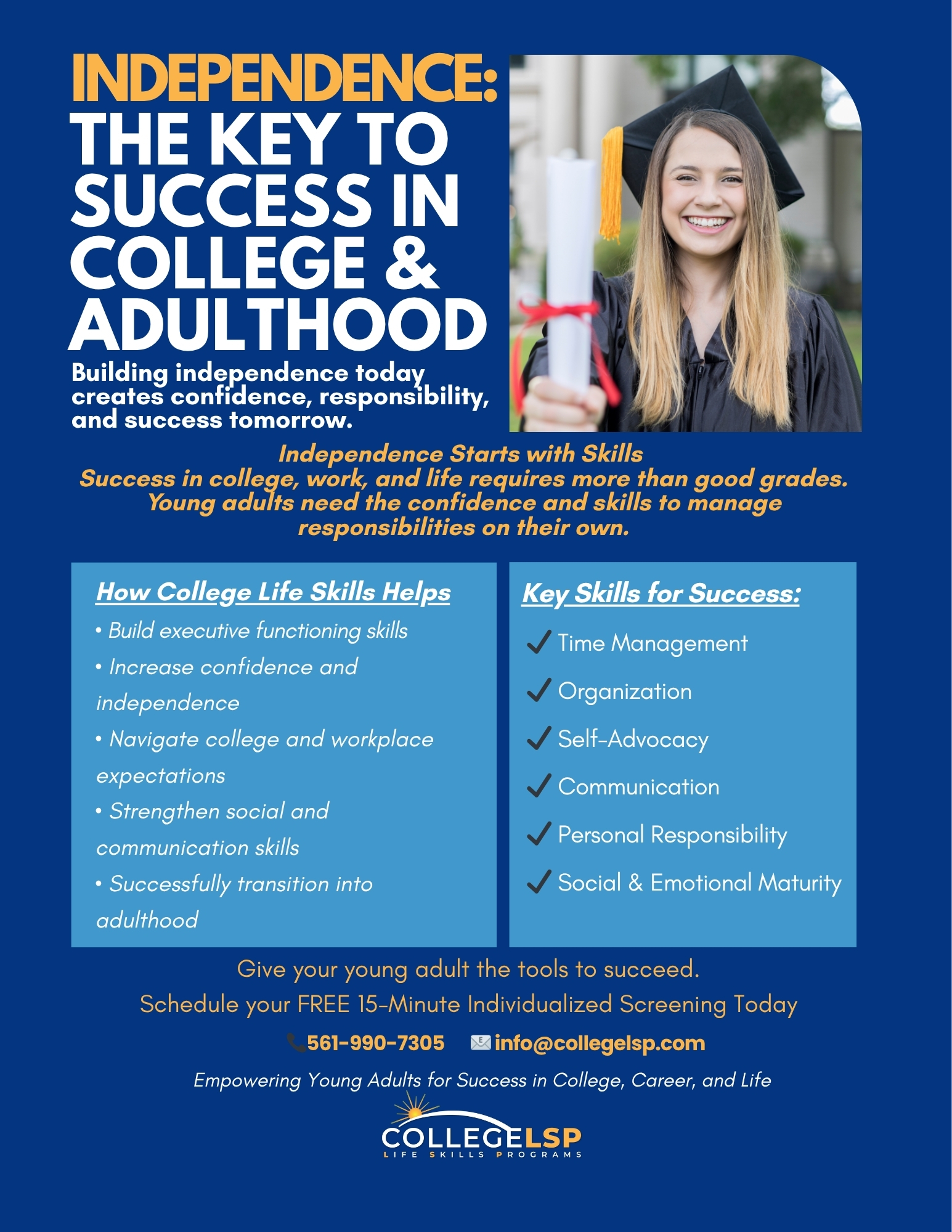
At the College Life Skills Program, our team of Doctoral and Master level professionals utilizes a series of highly individualized strategies, services, and techniques to help neurodivergent young adults who are college bound, in college, and even after college succeed in and after their transition into independent life. We help teach them life skills such as self-monitoring so they can be successful in the work world and in life as well as help them learn how to balance independent life on their own, and other executive functioning skills, social skills, and emotional maturity. If your young adult is struggling with life skills, such as self-monitoring on their own or the transition into college and adulthood, CollegeLSP has the tools to aid them in achieving and generalizing such skills.
Click here and call now to schedule your FREE 20-minute individualized screening- $150 value.
Dr. Eric J. Nach, Ph.D., M.Ed., A.S.D.C., is a Developmental and Behavioral Specialist who specializes in Autism, ADHD and related disorders. Dr. Nach is the founder of the College Life Skills Program where he and his team of professional’s help develop the Emotional Maturity, Executive Functioning, Life Skill and Social Abilities of college students and those high school students preparing for college. The CollegeLSP is a subsidiary program of the Support For Students Growth Center, located in Boca Raton, FL and providing services nationwide.
Arky, B. (2022, July 12). Going to college with autism. Child Mind Institute. Retrieved October 10th, 2023, from https://childmind.org/article/going-to-college-with-autism/#becoming-overwhelmed
Furfaro, H. (2018, May 29). Special interests hinder self-control in children with autism. Spectrum. Retrieved October 10th, 2023,, from https://www.spectrumnews.org/news/special-interests-hinder-self-control-children-autism/