What was that again…?
For one neurodivergent young man, every day was filled with confusion. When he was in class, he would frequently miss when the Professor was explaining the homework assignment since he was too busy taking notes, forget how and when a project needed to get done, and sometimes even miss an important point all together because he was doing something else. This then quickly caused classes to become stressful, yet home was not much different. When he was in his dorm, he felt like he was constantly asking his roommate what he had just asked of him, and even though his friend assured him it was fine, he still felt like a burden.
As time went on, this became a constant routine. Every day was filled with half or uncompleted tasks since the young man would get distracted or forget what needs to be done, he would become too overwhelmed with needing to plan and prioritize things, and even began not attending class since he felt as if no matter how hard he tried, he would always miss something. As time went on, the young man’s grades began to plumet, and so did his mental and physical health as well. He was too stressed to even get out of bed, and as time went on, his roommate became worried and contacted his parents who reached out to the College Life Skills Program for help. There, the young man met weekly online with a coach/counselor while in college to help strengthen his working memory by incorporating a notes journal and a planner into his daily life and speaking openly about his issues. As time went on, the executive functioning skills of this young adult with neurodiversity became stronger, allowing him to feel confident in his abilities to go back out and tackle independent life again.
Working memory is important because it allows young adults who are or are not neurodivergent to follow instructions with multiple steps, keep track of how a conversation is progressing, and even provides a sense of guidance in their decision making. In college, you are expected to be able to focus on and remember more than one thing at a time. Whether it be listening to the professor while taking notes, having a conversation with your roommate while cleaning, or following multiple steps to get a homework assignment done, college is constantly pulling young adults in multiple directions. Between school, work, and general life, working memory becomes handy for keeping track of daily tasks and life, hence why it is so important. However, for those with neurodivergent traits and/or executive dysfunction, maintaining a well-developed working memory can be difficult.
When it comes to those with neurodivergent traits, it’s said that “Individuals with [neurodiversity’s] perform poorly in working memory (WM) tasks.” (Han et. Al., 2022). Being able to retain information while other things are going on is an important skill needed to be successful both in college and the workplace. Without it, workload can seem more difficult than it is since there may be an inability to multi-task. Not being able to multi-task can make college and independent life hard since without it, transitioning from task to task quickly and efficiently can be harder for them than it needs to be. Things will eventually be forgotten and undone, especially since “Individuals with poor working memory tend to have trouble planning, organizing, and carrying out daily chores such as running errands, because it requires mentally formulating a “to do” list organized by time and location.” (dyslexiada, 2020). This does not mean that those with life challenges cannot develop these skills. It simply means they need some more support when doing so to learn the strategies needed, especially since struggling with it can cause a lot of anxiety, stress, depression, and other issues.
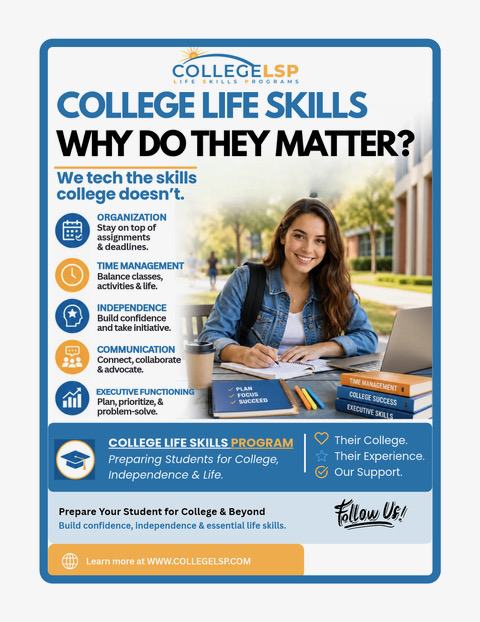
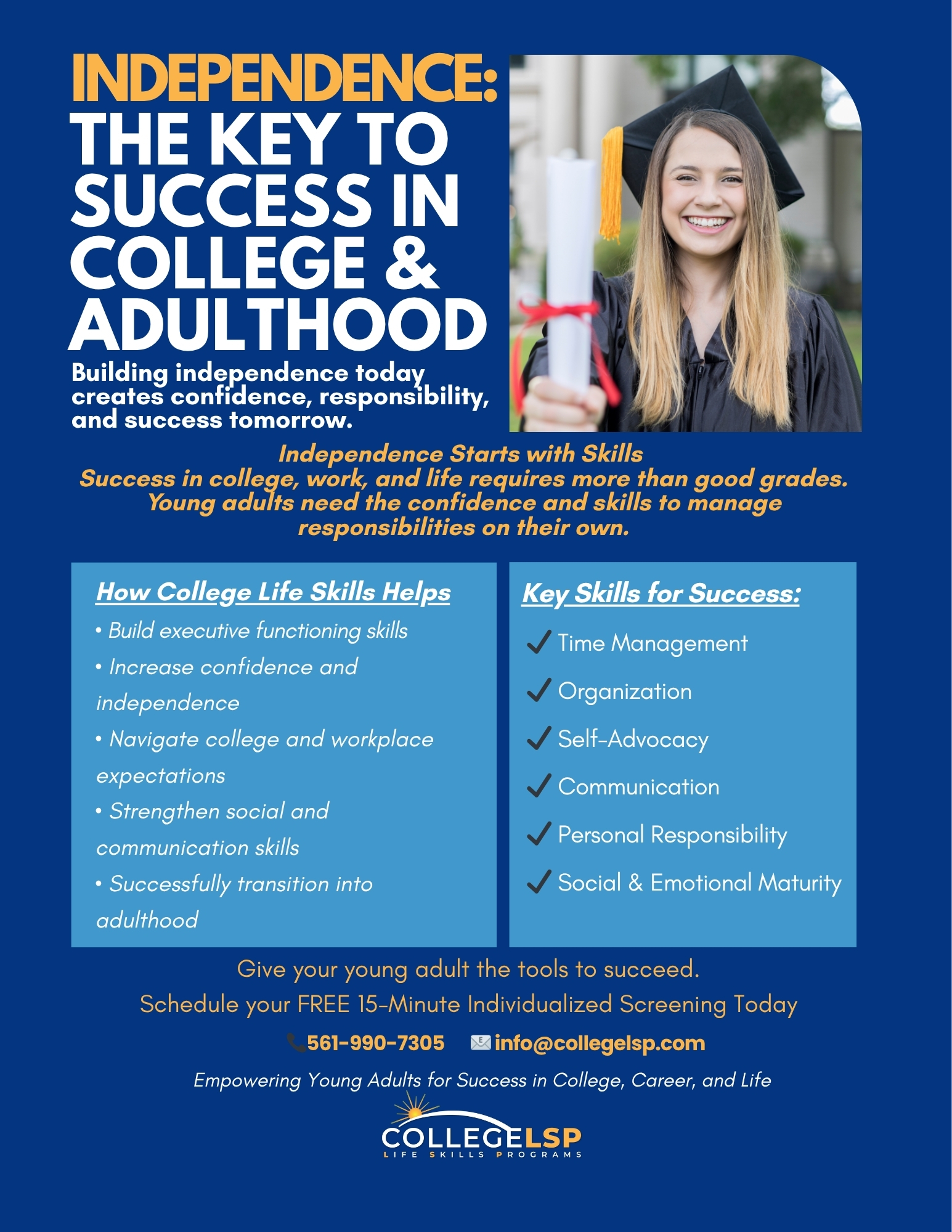
At the College Life Skills Program, our team of Doctoral and Master level professionals utilizes a series of highly individualized strategies, services, and techniques to help neurodivergent young adults who are college bound, in college, and even after college succeed in and after their transition into independent life. We help teach them life skills such as working memory so they can be successful in the work world and in life as well as help them learn how to balance independent life on their own, and other executive functioning skills, social skills, and emotional maturity. If your young adult is struggling with life skills, such as working memory or the transition into college and adulthood, CollegeLSP has the tools to aid them in achieving and generalizing such skills.
Click here and call now to schedule your FREE 20-minute individualized screening- $150 value
Dr. Eric J. Nach, Ph.D., M.Ed., A.S.D.C., is a Developmental and Behavioral Specialist who specializes in Autism, ADHD and related disorders. Dr. Nach is the founder of the College Life Skills Program where he and his team of professional’s help develop the Emotional Maturity, Executive Functioning, Life Skill and Social Abilities of college students and those high school students preparing for college. The CollegeLSP is a subsidiary program of the Support For Students Growth Center, located in Boca Raton, FL and providing services nationwide.
Han, Y.M.Y., Chan, MC., Chan, M.M.Y. et al. Effects of working memory load on frontal connectivity in children with autism spectrum disorder: a fNIRS study. Sci Rep 12, 1522 (2022). https://doi.org/10.1038/s41598-022-05432-3
Working memory: The engine for learning. International Dyslexia Association. (2020, April 8). https://dyslexiaida.org/working-memory-the-engine-for-learning/#:~:text=Individuals%20with%20poor%20working%20memory,Study%20skills%20may%20also%20suffer.