Friendship is a building block for social life. Some have friends from kindergarten that last well past college while some have friends that come and go, and some do not made friends, but no matter the situation each experience is unique to each of us and impacts us in a way that will leave a mark on our view of companionship. When people lack this building block, they can find life becomes more mundane and lonelier. This can then lead to other issues such as social isolation, a lack of social awareness, poor performance in college and an overall toll on mental health. Having friends also leads to fantastic experiences, teaches you how to be your own person when away from your family, and what having someone to always be there for you in a way your parents cannot, which is why it is important to learn how to make and maintain friendships so you always have an abundance of encouragement and support from all angels.
For some, finding this friendship can come more difficult than others. When it comes to college graduates, 9% report not having any sort of close connection with those they had been friends within school, while 24% of those still without a degree report not having any close friendships (Mekouar, 2021). For those with life challenges such as ADHD, Autism, Asperger’s, etc. They have been reported to be a part of the 69.3% to the 70.7% of students who have few to no friends by their teachers (Tarawneh et al. 2017). Although having life challenges doesn’t make you any less of a valuable friend, social anxiety or other things can make it more difficult to make friends and keep them, but it is not that hard to learn how to. The College Life Skills Program specializes in helping those with life challenges develop such skills to make their integration into independent college life enjoyable and that much easier.
When in college, students are typically away from home and any friends you had made during your time there. Maintaining a good relationship with those you deem fit from your past is important. They have watched you grow and grow with you, and a lot of the time they hold onto the same fond memories you do, but when away, it is time to make new friendships as well. Blossoming new relationships with those who are also experiencing this next chapter in their lives allows for a sense of connection an individual need. College is a time for fun, new, and exciting experiences, but can bring lows as well. Although your parents are only a phone call or text away, having people immediately there supplies this sense of instant comfort and is overall important for mental and physical health, so if you or your child is struggling to make and maintain friendships, trust the CollegeLSP to help.
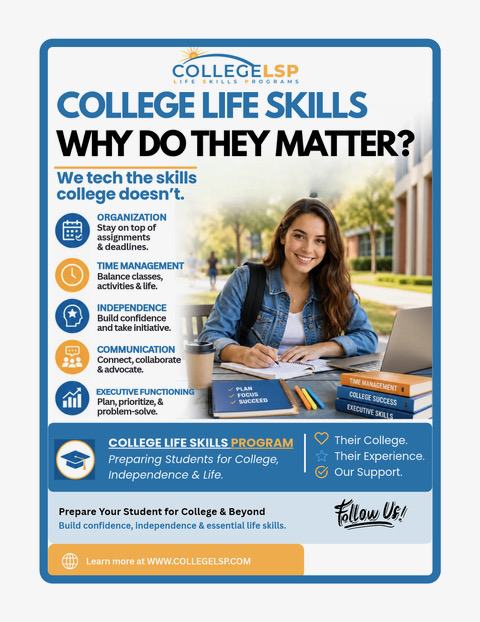
Dr. Eric J. Nach, Ph.D., M.Ed., A.S.D.C., is a Developmental and Behavioral Specialist who specializes in Autism, ADHD and related disorders. Dr. Nach is the founder of the College Life Skills Program where he and his team of professional’s help develop the Emotional Maturity, Executive Functioning, Life Skill and Social Abilities of college students and those high school students preparing for college. The CollegeLSP is a subsidiary program of the Support For Students Growth Center, located in Boca Raton, FL and providing services nationwide.
Tarawneh, R. K. A. (2017, August 3). Friendship skills of students with learning disabilities in Jordan from the perspectives of their teachers and the effect of some variables on it. Open Journal of Social Sciences. Retrieved March 11, 2022, from https://www.scirp.org/journal/paperinformation.aspx?paperid=78243
Mekouar, D. (2021, December 28). College-educated Americans have more friends, are less lonely, study finds. VOA. Retrieved March 11, 2022, from https://www.voanews.com/a/college-educated-americans-have-more-friends-are-less-lonely-study-finds-/6371353.html