Freedom is one of the main things people look forward to when growing up. Being able to make your own rules, do what you want when you want to do it, all while no one is there to loom over you with a disapproving comment is almost exhilarating. Yet, all this free will comes with the temptation to go a little too wild, and it’s not uncommon for people to give into it. Going off to college is the ultimate freedom. The switch from seeing your parents every day to only doing so every once and a while ignites something in people, which is why they tend to have the highest probability for high-risk behavior.
For students in college, they have been found to be more “prone to engage in risky behaviors because they are free from the moral supervision of parents.” (Schnider et al. 1991). Kids tend to believe that whatever their parents are telling them is just because they are older and not as fun when in reality, they are just trying to protect their children. However, kids do not see it this way. The word of their friends tends to be more influential, and for those who have a harder time making friends in the first place, they may find themselves agreeing to risky behavior just to fit in. Students with life challenges such as ADHD, Autism, Asperger’s, etc., according to the European Journal of Public Health have been found to be particularly at risk for falling into bad habits. (Palfivoa et al. 2016). The desire to fit in is something everyone craves, especially in your most vulnerable years, such as being alone in college, because everyone likes to be liked. Regardless, there are other ways to go about making friends that do not include falling victim to peer pressure, and the College Life Skills Program can help teach them.
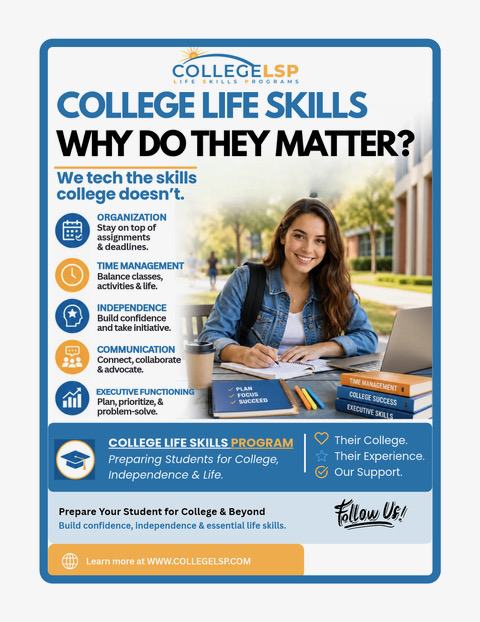
Beneficial skills such as not being afraid to say no, knowing what is good and bad to put into your body, and how to go about being safe with technology, valuables and personal things are ways you or your child can prevent falling into risky behaviors, and the CollegeLSP can show the best way to integrate them into daily life by targeting the emotional maturity, social abilities, executive functioning and life skills for college bound students. Knowing that good friends will like you no matter what, the best way is to ensure your child is surrounding themselves with the most positive people possible and can help them when choosing peers. Also knowing how to be safe when partaking in an action that can lead to risk can ensure you or your child is the safest when living on their own in college. Going off to college is supposed to be fun and full of new and exciting experiences, and as parents, you will not be able to monitor everything they are doing, so the best thing to do is acknowledge that and teach children how to avoid risky behavior, and the CollegeLSP maybe the best way to do so.
Dr. Eric J. Nach, Ph.D., M.Ed., A.S.D.C., is a Developmental and Behavioral Specialist who specializes in Autism, ADHD and related disorders. Dr. Nach is the founder of the College Life Skills Program where he and his team of professional’s help develop the Emotional Maturity, Executive Functioning, Life Skill and Social Abilities of college students and those high school students preparing for college. The CollegeLSP is a subsidiary program of the Support For Students Growth Center, located in Boca Raton, FL and providing services nationwide.
Schneider, D., & Morris, J. (n.d.). (PDF) risk-taking behaviors of college students. Retrieved February 27, 2022, from https://www.researchgate.net/publication/233969346_Risk-Taking_Behaviors_of_College_Students
Palfiova, M., Dankulincova Veselska, Z., & Bobakova, D. (2016, November 3). Is risk-taking behaviour more prevalent among adolescents with learning disabilities? Academic.oup.com. Retrieved February 27, 2022, from https://academic.oup.com/eurpub/article/27/3/501/2450392