Wait…are they upset with me?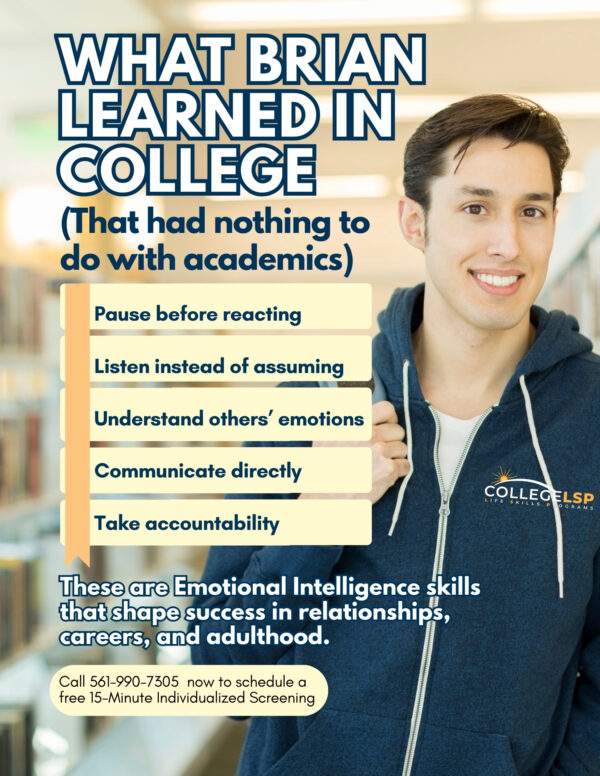
Brian always struggled with understanding the right way to approach feelings, especially when it pertained to someone else. He felt as if he never quite knew what they were feeling, or what was the appropriate way to handle the situation, and college was no different. What was different, however, was that he was now faced to handle that situation on his own. While at home, his parents would often help him by telling him what to do, or his friends who knew how Brian could be would simply just tell him themselves. Yet, this time was different.
As his roommate continued to come and go day after day without inviting him to lunch like he always did, Brian didn’t even notice something was different. He felt as if it was just another day, when in reality, his roommate was upset at him for not doing the dishes after he asked multiple times. It wasn’t until a mutual friend of theirs told Brian of his roommates’ unhappiness, and instead of reacting in an appropriate way, like asking his roommate to talk or expressing how he was sorry, Brian got angry. He felt embarrassed someone else had to tell him, and this made him yell at his roommate instead, claiming he should’ve told him himself.
After the argument, his roommate expressed how that wasn’t how he wanted to be treated, especially not as a friend, and as he did Brian realized that his friend was now not only upset with him, but hurt by his actions, and he had no idea how to fix it. This then caused him to reach out to his parents, who contacted the College Life Skills Program (CollegeLSP) for help. There, they met with a coach weekly so they could try and figure out a way to help Brian not only understand the importance of being able to understand his emotions, but those of others before reacting in an age-appropriate manner. His parents didn’t want to have to micromanage, and Brian wanted to be able to do it on his own, as he was now without them at college, so he met with a counselor who taught them the necessary skills needed to be able to strengthen his emotional intelligence. He began utilizing breathing exercises, taking a step back as needed, and learning how to listen, rather than just jump to conclusions. As Brian received this coaching, with a level of accountability, his ability to utilize this skill became far less difficult.
Emotional intelligence is important for not only socialization, but for personal reasons as well. Being able to understand not only what emotions they are feeling but why can help young adults react to situations in a way that is appropriate. College can be stressful. Between academics, gaining freedom, and adapting to a new way of life, things can become overwhelming very quickly. However, that doesn’t mean we have an excuse to react inappropriately to situations. While almost everyone can find themselves overreacting at times, not making that a habit is crucial for young adults to do.
Understanding the feelings of their peers and friends can help them nourish and maintain the relationships they have. At work, they must be able to know when it is time to take a step back, or how to react when things are stressful for them, their coworkers, and even customers. If not, they can quickly find themselves without a job all because they were unable to identify what emotions they or others were feeling. Emotional intelligence impacts our lives every day. Being able to realize you are feeling a certain emotion, whether it be positive or negative, and why can help young adults know the appropriate way to handle situations. One source explains how “According to Margaret Andrews, a former associate dean at Harvard University’s Division of Continuing Education and a current instructor in Harvard’s Emotional Intelligence in Leadership Program, ‘Emotional intelligence is critical in building and maintaining relationships and influencing others—key skills that help people throughout their career and wherever they sit in an organizational structure,’” (JWU, 2022).
College isn’t just about how smart you are. It is also about becoming a functional independent adult, and being able to understand yourself, others, resolve conflicts, communicate, and staying motivated are all a part of that, and all a part of emotional intelligence, and CollegeLSP can help them develop the skills to do so.
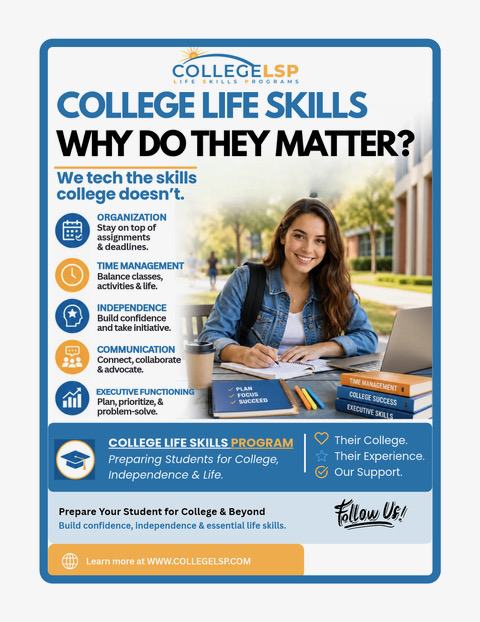
Our team of Doctoral and Master level professionals utilizes a series of highly individualized strategies, services, and techniques to help young adults who are college bound, in college, and even after college succeed in and after their transition into adult life. We help teach them skills such as how to utilize emotional intelligence so they can be successful in the real and work world, help them learn how to balance independent life on their own, and other life, executive functioning, social skills, and emotional maturity. If your young adult is struggling with the transition into college and adulthood, CollegeLSP has the tools to aid them in achieving and generalizing such skills.
Click here and call now to schedule your FREE 15-minute individualized screening.
Dr. Eric J. Nach, Ph.D., M.Ed., A.S.D.C., is a Developmental and Behavioral Specialist who specializes in Autism, ADHD and related disorders. Dr. Nach is the founder of the College Life Skills Program where he and his team of professional’s help develop the Emotional Maturity, Executive Functioning, Life Skill and Social Abilities of college students and those high school students preparing for college. The CollegeLSP is a subsidiary program of the Support For Students Growth Center, located in Boca Raton, FL and providing services nationwide
Jwu. (2025, March 26). How college students can improve their emotional intelligence. JWU Online. https://online.jwu.edu/blog/how-college-students-can-improve-their-emotional-intelligence/