I just don’t ever feel like it…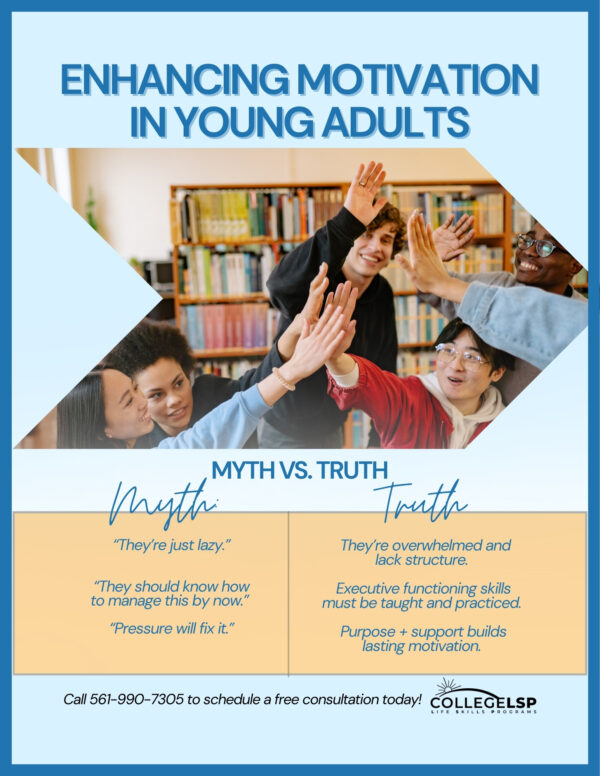 d
d
Amanda found that while living on her own started out fun, keeping up with her responsibilities was anything but. At first, she was able to maintain the balance between school, her social life, and her personal one, but as time went on, she found it more difficult to make time for everything. Instead of prioritizing what’s most important, she just began leaving things to be done later, but as she continued to do this, all of her tasks began piling up.
At first, Amanda wanted to set up a calendar to map out what and when she wanted to get done, but as she sat down to do it, she quickly became overwhelmed. Instead of asking for help or creating a plan, Amanda just gave up and went to bed, finding she had lost all motivation to do any of it. She thought maybe she would have more motivation the next day, but when she didn’t, this trend of ‘maybe tomorrow,’ repeated over and over again until she called her parents, letting them know she was on academic probation for failing almost all of her classes that semester.
Worried their daughters lack of motivation would continue to hinder her, they reached out to the College Life Skills Program (CLSP) for help. There, they met with a coach weekly so they could try and figure out a way to help Amanda not only understand the importance of completing her tasks, but feel motivated to start them, and not lose that motivation until she was finished. Her parents didn’t want to have to micromanage their daughter while she was away at college because they felt as if these were things that she should be able to handle at this age, and Amanda agreed. She wanted to be able to live independent successfully, so she met with a counselor who taught her the necessary skills needed to be able to efficiently maintain her motivation. Breaking tasks down into smaller ones, setting small goals for herself, utilizing timers, etc., are all ways Amanda was able to get her motivation back. After realizing motivation doesn’t come from the pressure of needing to get it done, but rather purpose, confidence, and now the right support, Amanda found maintaining her motivation was far less difficult
Motivation goes much farther for young adults than just academics. Washing your bedding and clothes, maintaining personal hygiene, making friends, staying organized, initiating and completing tasks, etc., alongside school can become far more difficult if they lack motivation. While parents, guardians, and peers can all help give them that push they need, it is crucial for young adults to have the personal drive as well, because if not, they may not maintain all these important chores and tasks. While a roommate may help them gain the motivation to do the dishes they have left in their room for two weeks, it doesn’t mean they will not repeat the cycle. Instead, they may continue to let the dishes pile up, and as they do, it may dwindle their desire to complete the other tasks they need to get done.
Lacking the motivation to get up and clean their room, shower, spend time with friends, do homework and more can make living an independent adult life very difficult. As they begin to show avoidance towards responsibilities, they may begin to fall behind in life. One source explains why this may cause such issues, stating “When these barriers are present, the brain shifts into a protective mode. Rather than moving toward opportunities, the young adult may hesitate, delay, or freeze. Parents may see this as resistance or lack of motivation. In truth, it may be a sign of fear of failure, low selftrust, or confusion about what path to choose,” (Gofmantherapyandconsulting, 2026). Not completing assignments or showing up to class, going out with peers, maintaining hygiene, etc., can cause them to want to drop out or even fail out of school, isolate themselves, and not get a job, leave home and start their own life. As these things pile up more and more, it can be harder and harder for young adults to be able to feel that motivation again, which is why it is so important to intervene and get the help needed before it’s too late, and CLSP can help them do so.
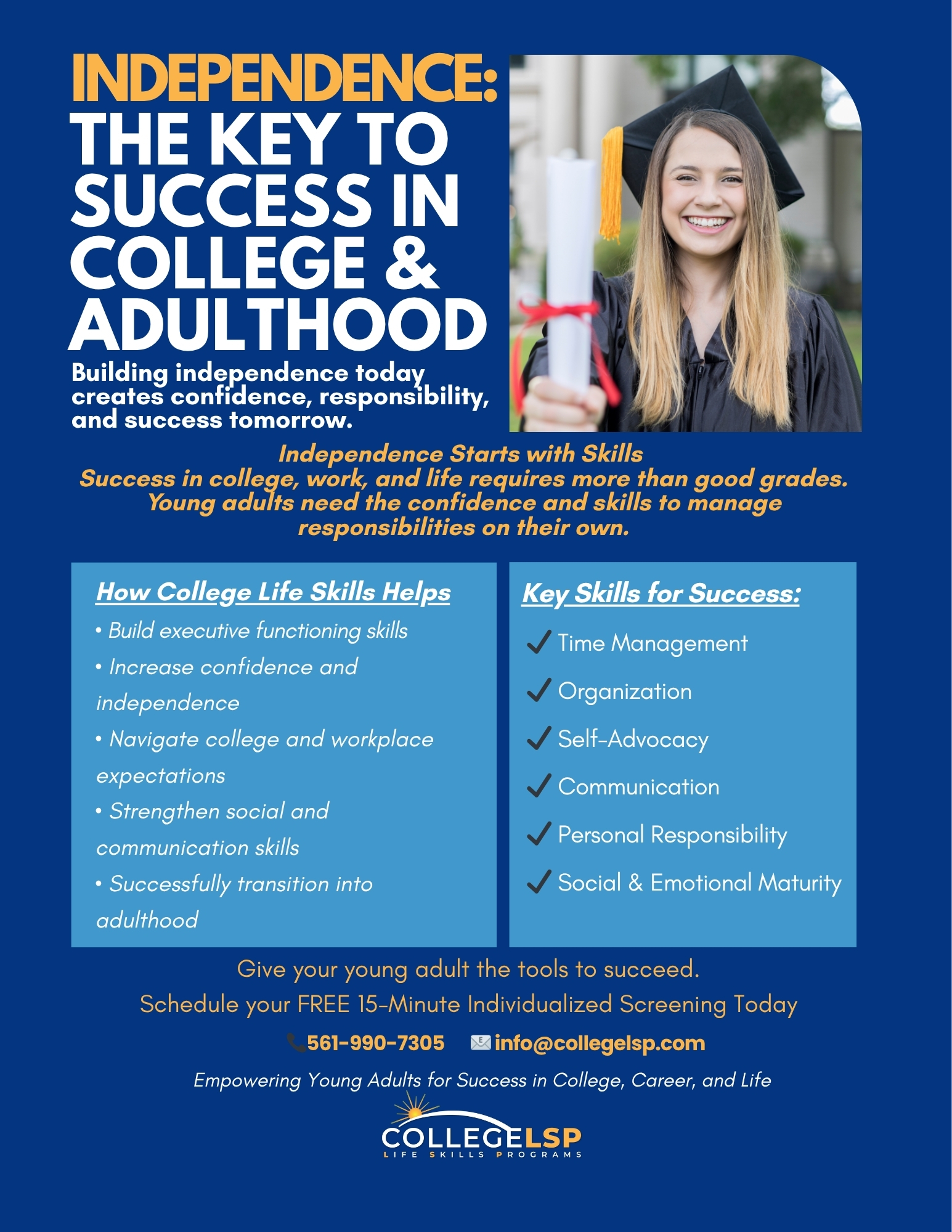
Our team of Doctoral and Master level professionals utilizes a series of highly individualized strategies, services, and techniques to help young adults who are college bound, in college, and even after college succeed in and after their transition into adult life. We help teach them skills such as maintaining motivation so they can be successful in the real and work world, help them learn how to balance independent life on their own, and other life, executive functioning, social skills, and emotional maturity. If your young adult is struggling with the transition into college and adulthood, CollegeLSP has the tools to aid them in achieving and generalizing such skills.
Click here and call now to schedule your FREE 15-minute individualized screening.
Dr. Eric J. Nach, Ph.D., M.Ed., A.S.D.C., is a Developmental and Behavioral Specialist who specializes in Autism, ADHD and related disorders. Dr. Nach is the founder of the College Life Skills Program where he and his team of professional’s help develop the Emotional Maturity, Executive Functioning, Life Skill and Social Abilities of college students and those high school students preparing for college. The CollegeLSP is a subsidiary program of the Support For Students Growth Center, located in Boca Raton, FL and providing services nationwide
Gofman, D. (2026, February 18). Beyond motivation: Why young adults get stuck (and how career coaching helps). Gofman Therapy and Consulting. https://www.gofmantherapyandconsulting.com/blog/young-adult-lack-of-motivation-coaching#:~:text=But%20motivation%20is%20complex.,about%20what%20path%20to%20choose.