Well, you’re my parents, why can’t YOU just fix it…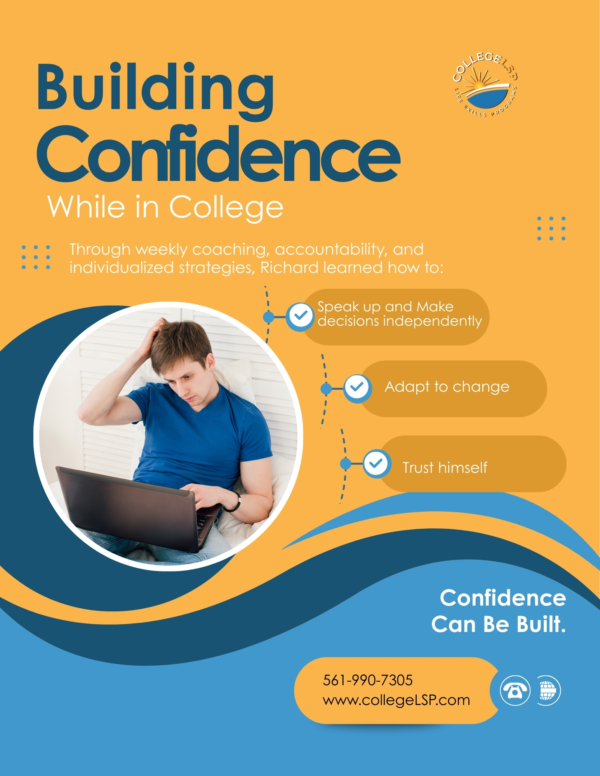
Richard liked college, but only when it came to academics. He easily got accepted to the school of his dreams and very easily adjusted to his classes because he was confident when it came to school. It was always easy for him, and now that he was off at college, that didn’t change. However, what did change was how much other stuff he now had to do all by himself. When at home, Richard never had to worry about scheduling, talking to others, knowing what to buy at the grocery store, or even self-advocate because he always had his parents there to do it for him, and now that he had to do it on his own, he felt he lacked the confidence to do so.
Every time Richard tried to tell his roommate he didn’t like something, he just clammed up before changing the subject, leaving whatever was bothering him unresolved. Afterwards, when trying to make his advising appointment, he called the office, but once they told him they didn’t have the one time and day he had mapped out available, he panicked and told them a time he couldn’t do. Then when trying to socialize at a school gathering, instead of walking up to people who were talking about something he was also interested in, he stood in the corner just observing, worried he would say or do the wrong thing. This wasn’t because he didn’t have the ability to do these things, but rather because he lacked the confidence to reassure himself that whatever happened, he could handle it in an age-appropriate way.
As time went on, and these things continued to pile up, Richard felt himself become unhappy with the situation he was in. Despite getting an internship, doing well academically, and making friends with his roommate, his lack of confidence caused him to isolate, and as time went on, he began avoiding work, going out with his friend, and going to class. Worried his parents would be disappointed, he avoided advocating to them as well, so his roommate, who had noticed this negative change, reached out for him.
Worried their son’s confidence would hinder his ability to be success while away at college, Richards parents contacted the College Life Skills Program for help. There, they met with a coach weekly so they could try and figure out a way to help Richard not only understand the importance of having confidence but feel confident when doing things that otherwise might push him out of his comfort zone. His parents didn’t want to have to be the ones always doing things they knew their son was more than capable of doing, and Richard, now being a young adult, wanted support that wasn’t his parents, so he met with a counselor helped build his confidence. As Richard received this coaching, with a level of accountability, his ability to feel confident in his ability to handle a situation on his own became far less difficult.
Confidence is an important trait for a young adult to have. Not just because it is a positive one, but because it influences many other aspects of their life. Being able to socialize, self-advocate, be independent and more are all rooted in this skill. If young adults are not confident in their abilities, it may prevent them from hitting certain milestones or even make friends in new environments because they are too worried about what they might do, it hinders them from doing it all together. Feeling as if they will say something wrong, not be able to manage independence on their own, feel like an inconvenience for asking for help, etc., are all things a young adult can feel, not because that will inevitably happen, but because they lack the confidence to know they have the skills needed in case something does go wrong.
Your young adult could be the smartest kid in the world, but without confidence, they may begin to doubt themselves. Second guessing everything they say/do, avoiding responsibilities, isolating themselves from social situations, not completing tasks at school/work due to fear of getting something wrong/criticized, etc., are all things that can stem from a lack of confidence. This then may cause the young adult to want to drop out, not get a job, and fail to become independent all together, but with the proper tools, guidance, and people who believe in them, confidence can not only be built up, but a strong trait in their daily life.
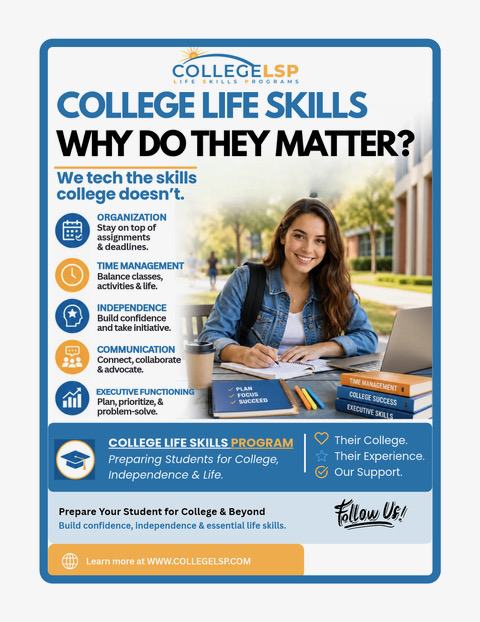
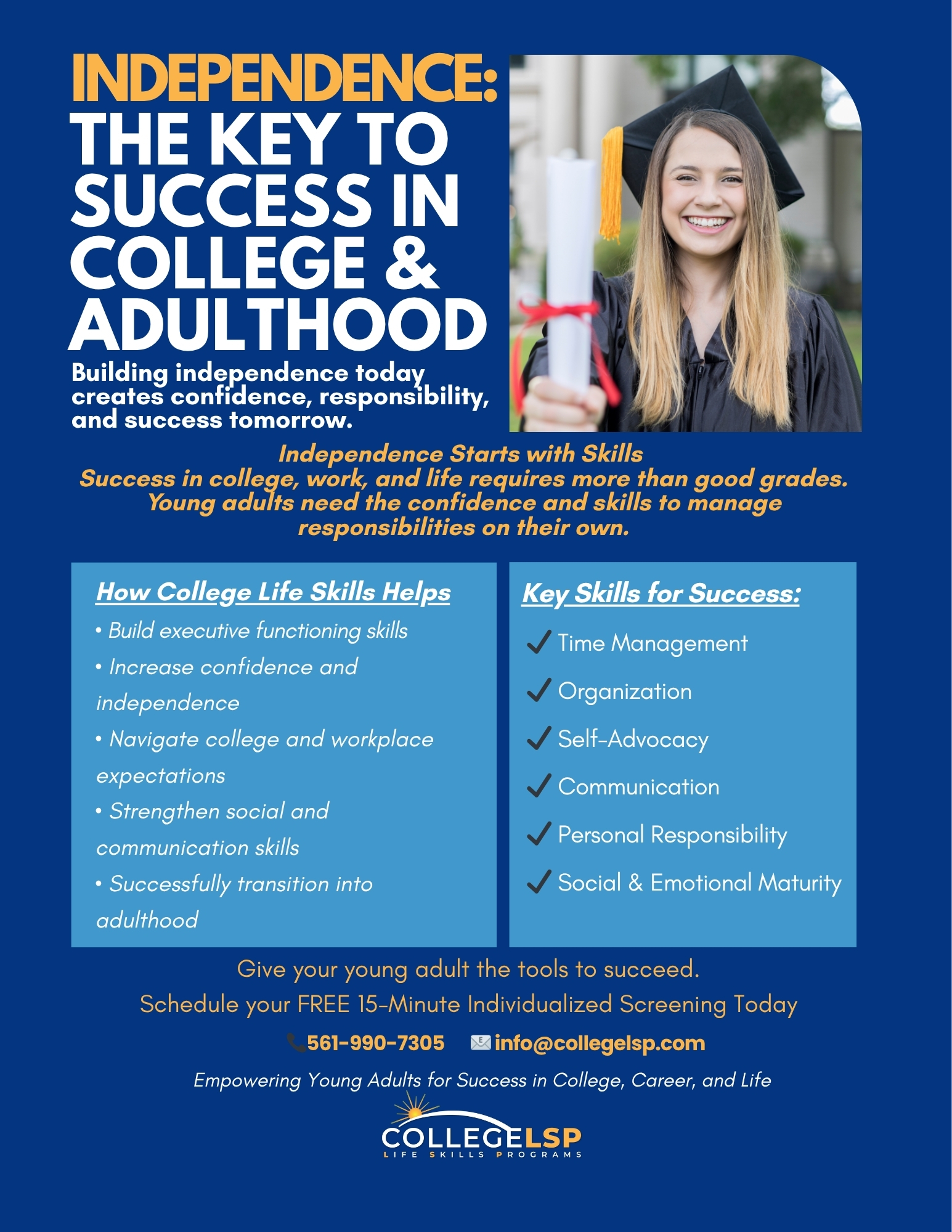
Our team of Doctoral and Master level professionals utilizes a series of highly individualized strategies, services, and techniques to help young adults who are college bound, in college, and even after college succeed in and after their transition into adult life. We help teach them skills such as confidence so they can be successful in the real and work world, help them learn how to balance independent life on their own, and other life, executive functioning, social skills, and emotional maturity. If your young adult is struggling with the transition into college and adulthood, CollegeLSP has the tools to aid them in achieving and generalizing such skills.
Click here and call now to schedule your FREE 15-minute individualized screening.
Dr. Eric J. Nach, Ph.D., M.Ed., A.S.D.C., is a Developmental and Behavioral Specialist who specializes in Autism, ADHD and related disorders. Dr. Nach is the founder of the College Life Skills Program where he and his team of professional’s help develop the Emotional Maturity, Executive Functioning, Life Skill and Social Abilities of college students and those high school students preparing for college. The CollegeLSP is a subsidiary program of the Support For Students Growth Center, located in Boca Raton, FL and providing services nationwide