Maybe next week…
As one young woman finds all her time being taken up by either school or work, she realizes she isn’t leaving any time for the fun things other college students want to do on the weekends. Instead of going out to eat or seeing a movie, she stays inside completing her homework (hopefully) for the upcoming week, finishing her chores, or going to work, and as time goes on, she realizes her whole life is being consumed by her responsibilities.
The fear of falling behind was so great that this young woman began prioritizing her school and job over everything else, and as time went on, her friends and parents start to worry. Since the young woman doesn’t make any time for social events, they worry that she is beginning to isolate herself because of the fears she is facing. She would much rather miss out on a fun day at the movies so she can complete her work that isn’t due for another few weeks, and when she does have a bit of free time, she uses it to get hours at work or clean up around her apartment instead of spending time with others. This quickly becomes overwhelming for the young woman who realizes that all this work with no downtime was rapidly taking a toll on her mental and physical health. She was constantly tired from always doing something, and since she was putting so much pressure on herself to get things done, whenever she would relax, she would be plagued with the anxiety of wasting time.
All these factors led the young woman to become burnt out, so much so that she felt as if she was too tired to do anything. She couldn’t do her homework, chores, go to work, or even bother to answer a friend’s or parents text message, all of which made her suddenly begin resenting college and independent adult life. Instead, she just wanted to drop out and return home where she felt as if things were easier for her to manage since her parents used to help manage her tasks and time for her, which worried them. They didn’t want their daughter to be at risk for “Failure to Launch,” but as time went on, they notice that her inability to balance school, work and life was quickly taking its toll.
For those with neurodivergent traits, managing a school-work-life balance can be difficult. They may feel as if prioritizing one thing over another is the right thing to do, when in reality, it is the implication of all things in their daily lives that is important. According to one source, when it comes to college students dealing with this type of time management, “Multitasking is not a new concept to students, but many find themselves struggling to manage all of their obligations and maintain a … balance without burning out.” (Goodwin, 2022). Burnout is not an uncommon occurrence in college. When it comes to employing the executive functioning strategies essential to manage midterms, finals, projects, and papers, most college students become tired from all the work they must do on top of making time for everything else, but it is important for them to know when to take a break. Going out for lunch, seeing a movie, participating on a campus activity, or even just talking with a friend on the phone for fifteen minutes are all ways they can implement life into the workday, and doing so can prevent them from becoming overwhelmed by college life and responsibility.
College comes with a lot of responsibilities whether it be getting your work done, paying your rent on time, or even just making sure you get up early enough to shower and brush your teeth, however, this can quickly become overwhelming for freshly independent young adults. For students, “More than 80% of college students have felt overwhelmed by their responsibilities.” (Haas, 2021). In doing so, they can start to neglect the more fun things in life because they are either too tired or don’t have enough time, which can cause issues such as isolation, depression, anxiety, etc. for those who struggle to maintain a school-work-life balance, and at The College Life Skills Program, we acknowledge this risk.
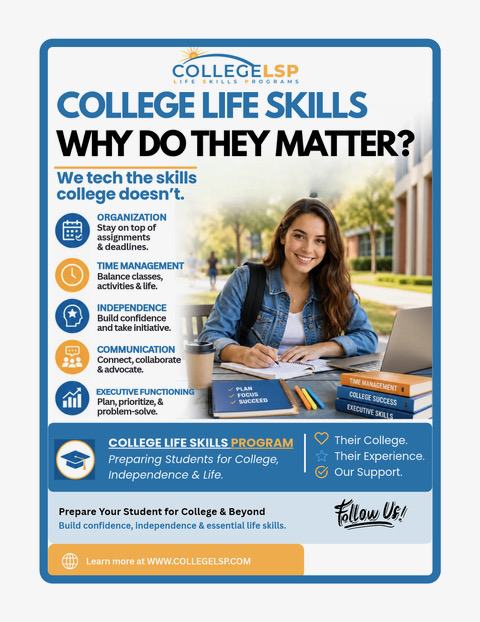
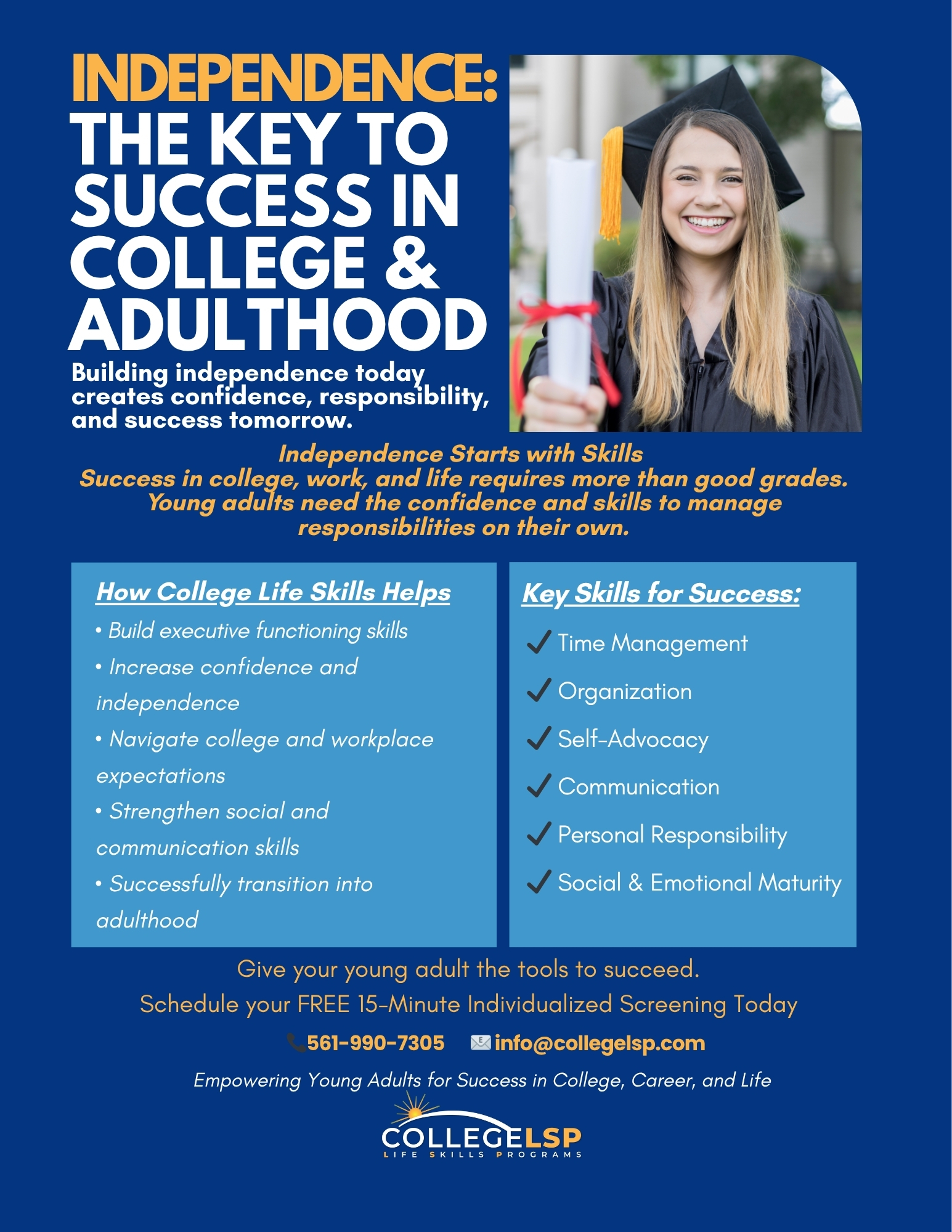
At the College Life Skills Program, our team of Doctoral and Master level professionals utilizes a series of services and techniques to help young adults who are college bound, in college, and even after college succeed in and after their transition into independent life. We help teach them life skills such as being able to balance both work and life both in the work world and in life to help them learn how to balance independent life on their own, as well as executive functioning skills, social skills, and the development of emotional maturity. If your young adult is struggling with life skills, such as being able to implement downtime into their daily lives or the transition into adulthood, CollegeLSP has the tools to aid them in achieving such skills.
Dr. Eric J. Nach, Ph.D., M.Ed., A.S.D.C., is a Developmental and Behavioral Specialist who specializes in Autism, ADHD and related disorders. Dr. Nach is the founder of the College Life Skills Program where he and his team of professional’s help develop the Emotional Maturity, Executive Functioning, Life Skill and Social Abilities of college students and those high school students preparing for college. The CollegeLSP is a subsidiary program of the Support For Students Growth Center, located in Boca Raton, FL and providing services nationwide.
Goodwin, C. (2022, February 22). Students struggle to maintain a work-life balance. The Cougar. Retrieved April 17, 2023, from https://thedailycougar.com/2022/02/22/students-struggle-to-maintain-a-work-life-balance/
Haas, K. (2021, July 22). Stress, depression, and anxiety are too common in college students. Point of Blue. Retrieved April 17, 2023, from https://blog.bcbsnc.com/2021/07/stress-depression-and-anxiety-are-too-common-in-college-students/#:~:text=Over%20half%20of%20college%20students,felt%20overwhelmed%20by%20their%20responsibilities.