But what if I get rejected…
For one neurodivergent young man, rejection has always been extremely difficult for him to handle because of his Rejection Sensitive Dysphoria. Every time he has experienced it, he would feel intense emotional pain that caused him to have emotional outburst, and while away at college, his parents weren’t there to help him get through it. Every time he felt as if he was rejected, whether it be in a social setting with his roommate or in a classroom, he would react irrationally. He would scream, hit, and break things because of this, and as time went on, his fear of rejection began preventing him from doing most things. He stopped going to classes, social events, and even work because of his Rejection Sensitive Dysphoria, and as time went on, he began falling behind in not only his classes, but in life, causing his parents to reach out to The College Life Skills Program for help.
There, he met with a coach weekly so he could try and manage his Rejection Sensitive Dysphoria by learning and applying strategies so he can manage this stress, hurt, and anxiety on his own. He would practice breathing strategies and taking a moment to analyze the situation before reacting, along with other techniques to try and learn how to manage rejection at an adult level. As he received this coaching, with a level of accountability, his ability to handle independent life flourished, preventing him from falling behind in life due to his poor ability to manage his thoughts and emotions..
For those with Rejection Sensitive Dysphoria (RSD), it is more than just not liking rejection. For them, it causes “significantly heightened intense negative feelings, and severe emotional pain that is difficult to control.” (Bhandari, 2023). This can then cause further issues down the line, such as the inability to control their behavior and emotions because of RSD, becoming exceptionally embarrassed in situations that are not as dramatic as they may be seeing them, avoidance due to the fear of rejection, low-self-esteem, and so much more (clevelandclinic, 2022).
RSD can made places like college, work, and overall life harder, especially for neurodivergent individuals. If they are constantly too worried about the possibility of rejection, then they will be unlikely to try anything new, hindering them from expanding their knowledge and preventing them from reaching their fullest potential. This can then lead them to not want to go or continue college, search for a job, and eventually become independent, forcing them to rely on their parents well into their adulthood.
Rejection is a part of life, and although most do not enjoy it, it is something we all face. It helps us realize what does and doesn’t work, who we do and do not like and vice versa, and is an overall useful thing despite its ugly disguise. What may hurt in the moment can help us grow in the future, and if both neurodivergent and non-neurodivergent people are struggling with RSD, it can prevent them from being successful, but with the proper help, they can learn how to minimize the impact of this issue.
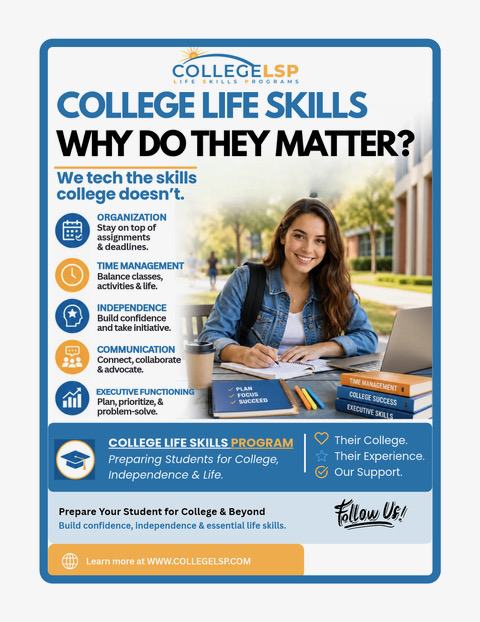
At the College Life Skills Program, our team of Doctoral and Master level professionals utilizes a series of highly individualized strategies, services, and techniques to help neurodivergent young adults who are college bound, in college, and even after college succeed in and after their transition into independent life. We help teach them life skills such as how to manage RSD so they can be successful in the work world and in life as well as help them learn how to balance independent life on their own, and other executive functioning skills, social skills, and emotional maturity. If your young adult is struggling with life skills, such managing RSD on their own or the transition into college and adulthood, CollegeLSP has the tools to aid them in achieving and generalizing such skills.
Click here and call now to schedule your FREE 20-minute individualized screening.
Dr. Eric J. Nach, Ph.D., M.Ed., A.S.D.C., is a Developmental and Behavioral Specialist who specializes in Autism, ADHD and related disorders. Dr. Nach is the founder of the College Life Skills Program where he and his team of professional’s help develop the Emotional Maturity, Executive Functioning, Life Skill and Social Abilities of college students and those high school students preparing for college. The CollegeLSP is a subsidiary program of the Support For Students Growth Center, located in Boca Raton, FL and providing services nationwide
Professional, C. C. medical. (2022). Rejection sensitive dysphoria (RSD): Symptoms & treatment. Cleveland Clinic. https://my.clevelandclinic.org/health/diseases/24099-rejection-sensitive-dysphoria-rsd
WebMD. (n.d.). Rejection sensitive dysphoria: Causes and treatment. WebMD. https://www.webmd.com/add-adhd/rejection-sensitive-dysphoria