I’ll just deal with it…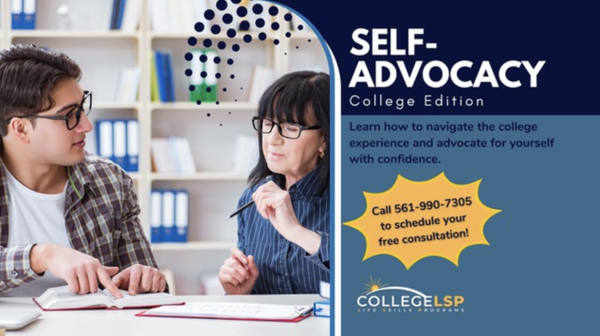
For one neurodivergent young man, his poor life skills made it difficult for him to self-advocate while away at college. The thought of having to tell his roommate that something he did was bothering him made the young man overly anxious, and as time went on, he just delt with the things that annoyed him. Yet, his dorm wasn’t the only place he struggled to speak up. When in class, he found himself needing some extra clarification on a subject, but instead of asking his professor or his classmates for help, the young man just stayed silent. This then caused him to do poorly on the test, and the next test after that since he felt as if he was unable to ask for that help.
As time went on, this trend of not self-advocating continued, causing him to fall behind in his classes. Between the stress of failing and feeling as if he was unhappy in his own dorm room, he quickly became resentful of college, and when he went home for fall break, he informed his parents that he wanted to drop out. Worried for their son, they reached out to The College Life Skills Program for help. There, he met with a coach weekly so he could learn how to strengthen these life skills by learning and applying strategies such as practicing what he would say while he was alone before actually doing so to prevent his anxiety about his poor self-advocating skills from affecting his life. As the young man received this coaching, with a level of accountability, his ability to handle independent life flourished, preventing him from dropping out of college due to the stress of undeveloped self-advocating skills.
In college, many young adults will not have their parents there to speak up for them. Instead, they will have to speak up on their own. Whether it be telling your roommate about something that is important to you or asking a professor for a bit of extra help on an assignment, self-advocacy is an important skill for college students to have. Without it, they may find independent life daunting because they feel as if they can never speak up for themselves. This can then affect many aspects of their lives. School, work, and general life require a young adult to self-advocate on the daily.
If a neurodivergent young adult cannot tell their boss about an issue they are having or tell their friends something that may be bothering them, the stress and other issues that come with not talking about their problems can make them feel as if they are drowning in anxiety, depression, and more because their problems won’t be solved unless they self-advocate. A source shows this importance by explaining how “People who know how to self-advocate are more likely to do well in school, work, and life. They often feel confident in what they’re learning and doing. Self-advocacy also creates independence.” (Lee, 2021).
For those with poor life skills, self-advocating can be hard, making life difficult, but it can also make college harder than it needs to be as well. In “The Journal of Postsecondary Education and Disability” it states, “Research shows self-advocacy skills are related to academic performance and successful adaptation to college.” (Pfeifer et al. 2021). This shows how if an individual does not have adult level self-advocacy skills, they can begin to fall behind not only in life, but school as well. Between the stress that already comes with life and school for someone who struggles with life skills, they may be at a higher risk of dropping out of college, not getting, or maintaining a real-world job, and moving home because they find life to be too hard on their own. However, with the proper help, self-advocacy can be learned.
At the College Life Skills Program, our team of Doctoral and Master level professionals utilizes a series of highly individualized strategies, services, and techniques to help neurodivergent young adults who are college bound, in college, and even after college succeed in and after their transition into independent life. We help teach them life skills such as self-advocacy so they can be successful in the work world and in life as well as help them learn how to balance independent life on their own, and other executive functioning skills, social skills, and emotional maturity. If your young adult is struggling with life skills, such as self-advocacy on their own or the transition into college and adulthood, CollegeLSP has the tools to aid them in achieving and generalizing such skills.
Click here and call now to schedule your FREE 20-minute individualized screening- $150 value.
Dr. Eric J. Nach, Ph.D., M.Ed., A.S.D.C., is a Developmental and Behavioral Specialist who specializes in Autism, ADHD and related disorders. Dr. Nach is the founder of the College Life Skills Program where he and his team of professional’s help develop the Emotional Maturity, Executive Functioning, Life Skill and Social Abilities of college students and those high school students preparing for college. The CollegeLSP is a subsidiary program of the Support For Students Growth Center, located in Boca Raton, FL and providing services nationwide.
Pfeifer, M. A., Reiter, E. M., Cordero, J. J., & Stanton, J. D. (2021, June). Inside and out: Factors that support and hinder the self-advocacy of undergraduates with ADHD and/or specific learning disabilities in STEM. CBE life sciences education. Retrieved Oct 24, 2023, from https://www.ncbi.nlm.nih.gov/pmc/articles/PMC8734393/
Lee, A. (2021, July 12). What is self-advocacy?. Understood. https://www.understood.org/en/articles/the-importance-of-self-advocacy#:~:text=People%20who%20know%20how%20to,might%20not%20be%20aware%20of.