College is one of the only places you truly get to be unapologetically yourself. There is no one there to tell you who or how you used to be, and when taking classes for your major you discover people who have similar interests, making it that much easier to feel comfortable expressing yourself. Yet, for some, this transition into being carefree about how you are perceived does not come so easy. In high school, people tend to be more judgmental. Everyone knows everyone, but in college, you see new faces every semester, which is why it is so easy to be expressive, however, what people do not know is how important it is to be self-advocating. In college, everyone is competing to be the best. You are all fighting for the same jobs at the same time, so showing teachers who you are and what you believe in helps you stand out from the rest. Self-advocacy is not a matter of being cocky, but rather a desire to express one’s interests and opinion on the world, which is what makes you unique to the people around you and is more crucial to academic success in college than most initially think.
People always preach about the idea of being self-advocating and how important it is to be yourself on an emotional level, especially parents, which is why kids tend to brush off this life lesson, but studies prove how important doing so actually is. “The Journal of Postsecondary Education and Disability” it states “Research shows self-advocacy skills are related to academic performance and successful adaptation to college.” (Pfeifer et al. 2021). This shows that being expressive about who you are and what you believe in is not only important for mental health since in college, the stress can take a toll on it, but for overall academic success as well. For those with and without various abiliies, however, such as ADHD, Autism, Asperger’s, etc. Becoming self-advocating comes less naturally than those without them. Yet, this trait is deemed just as important, if not more. The National Library of Medicine explains that “Self-advocacy is linked to the success and retention of students with disabilities in college.” (Daly-Cano et al. N.d.). Being able to properly represent who you are as a person is much easier said than done, and places like The College Life Skills Program understands that and its importance, which is why they developed a program to help students with and without various abilities become pros at things such as self-advocacy.
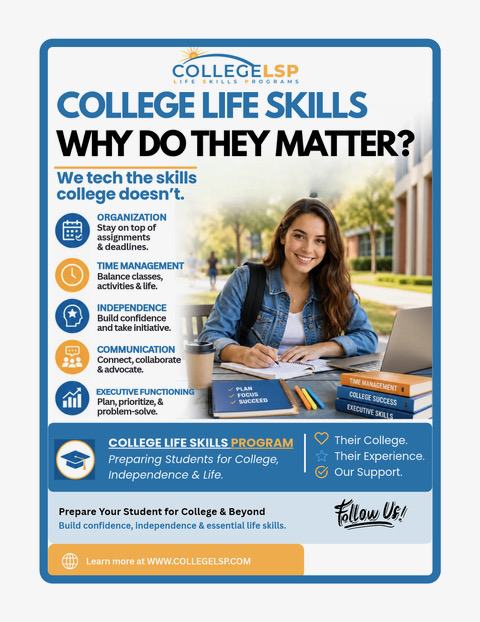
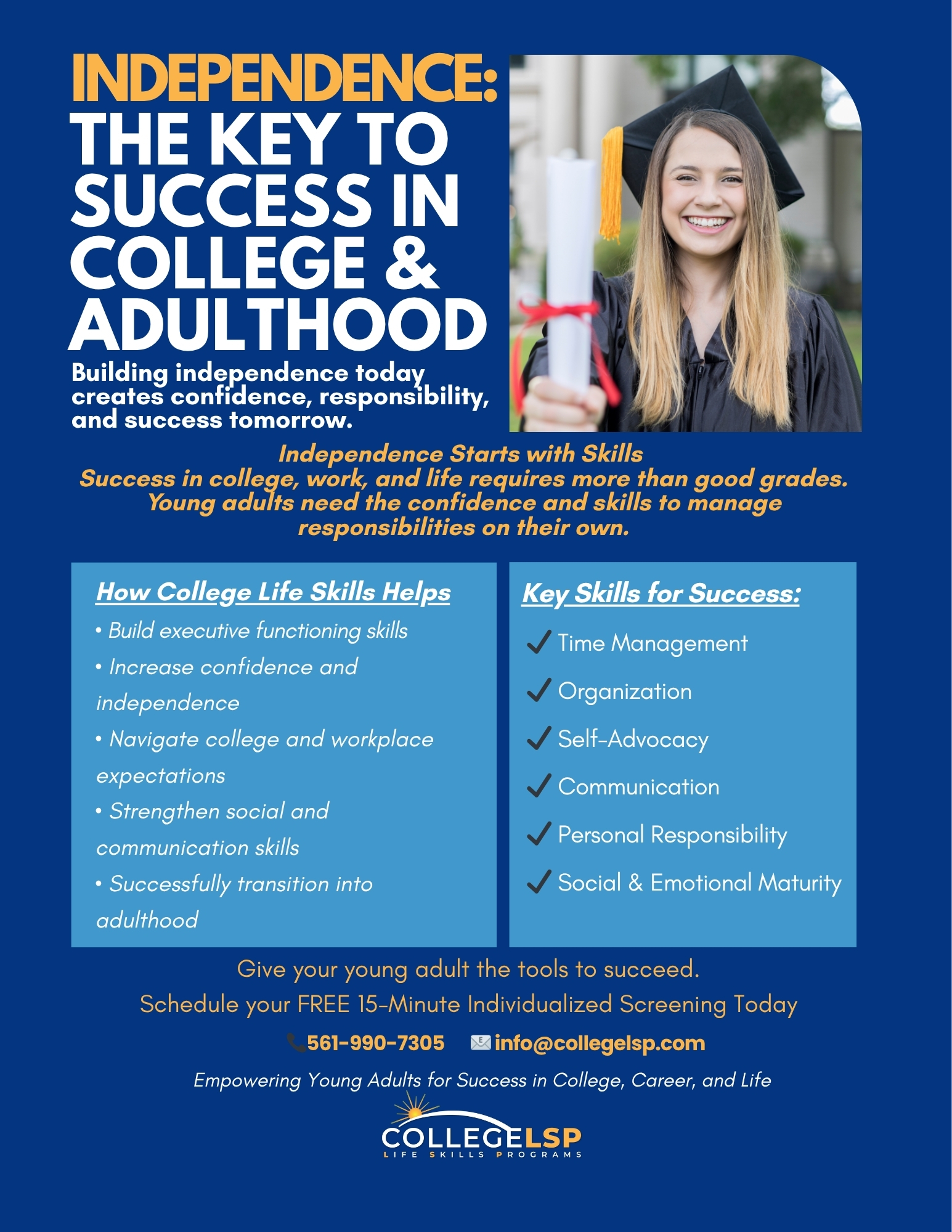
Every person should feel like they are heard in college. Leaving a place like high school where your individuality and voice are dulled and often muted and going to a place like college where it is celebrated and needed to succeed is a huge shift, which is why CollegeLSP made it a part of its program. The transition into such a change can be stressful, and otherwise difficult to do on your own, but the CollegeLSP and their staff of professionals makes it easy to not only learn how to become self-advocating, as well as maintain such a trait in daily life even after participating in the program. Don’t let anything hold you or your child back from being themselves. Trust the CollegeLSP to help.
Dr. Eric J. Nach, Ph.D., M.Ed., A.S.D.C., is a Developmental and Behavioral Specialist who specializes in Autism, ADHD and related disorders. Dr. Nach is the founder of the College Life Skills Program where he and his team of professional’s help develop the Emotional Maturity, Executive Functioning, Life Skill and Social Abilities of college students and those high school students preparing for college. The CollegeLSP is a subsidiary program of the Support For Students Growth Center, located in Boca Raton, FL and providing services nationwide.
Pfeifer, M. A., Reiter, E. M., Cordero, J. J., & Stanton, J. D. (2021, June). Inside and out: Factors that support and hinder the self-advocacy of undergraduates with ADHD and/or specific learning disabilities in STEM. CBE life sciences education. Retrieved March 31, 2022, from https://www.ncbi.nlm.nih.gov/pmc/articles/PMC8734393/
Journal of Postsecondary Education and disability … – eric. (n.d.). Retrieved March 31, 2022, from https://files.eric.ed.gov/fulltext/EJ1074673.pdf