I know it’s important! It’ll get done…probably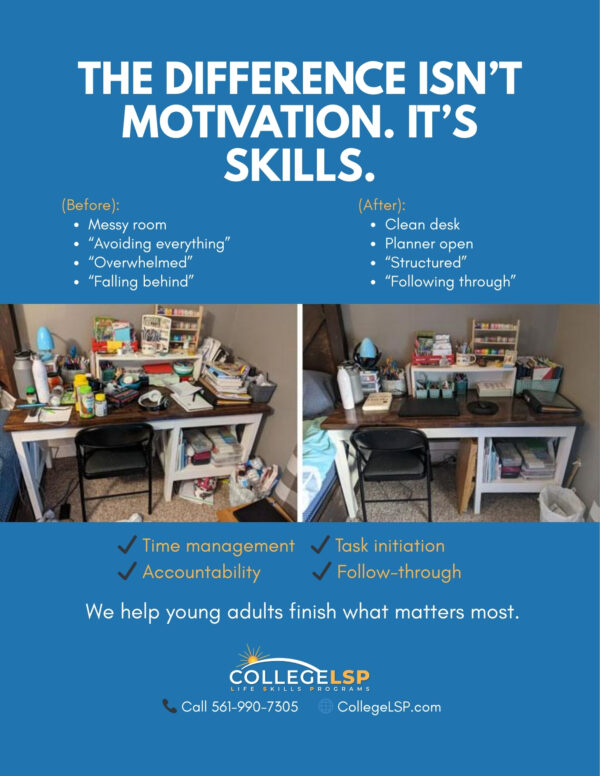
Sam was constantly being reminded by his parents in high school to get things done, so much so when it came to apply for college, they stood over his shoulder and watched him submit his applications so it would actually be done on time. Now that he was away, they weren’t there to do that anymore, and as time went on, more and more things Sam was supposed to get done, didn’t. The clothes on his floor became piles, his homework remained undone, he continued not to shower and overall wouldn’t complete any tasks he was responsible for.
As this trend continued, his roommate would complain of the mess, and Sam began failing his classes. With the fear of now being kicked out for both continuing to fail while on academic probation, and not maintaining a clean dorm, Sam completely shut down. Instead of working towards getting what matters done, he avoided it all until he couldn’t anymore. After his parents received a phone call from the school, alerting them of their son’s current issues, they quickly realized that he went off to college completely unprepared and contacted the College Life Skills Program for help.
There, they met with a coach weekly so they could try and figure out a way to help Sam not only understand the importance of starting a task but feel confident with his ability to finish it on his own in an age-appropriate manner. His parents didn’t want to have to micromanage like they did when their son was younger, so he met with a coach who taught them the necessary skills needed to be able to efficiently finish what mattered. He began setting timers for both starting a task and taking a break, so he didn’t get burnt out, referring to a chore calendar, managing a weekly planner, and more to help him manage his adult life. As Sam received this coaching, with a level of accountability, his ability to finish what was important in his life became far less difficult.
As a young adult, being able to finish what you started is an important skill that impacts many aspects of their life. Whether it be helping that friend with a task you promised to do, completing a homework assignment, folding that laundry, doing the dishes, etc., following through is what helps them not only feel accomplished, but stay on track and even get ahead. If they are constantly avoiding whatever task they initially started, or starting the task all together, it can create a cycle of procrastination. This then causes things to continue to build up, and instead of having one thing finished before moving onto another, nothing gets done at all. This can then cause young adults to feel stuck. They may lose the motivation needed to get those important things done, and as time goes on, their mental health, hygiene, and overall adult life can be impacted negatively. Failing or dropping out of college, not getting a job, lack of a friend group/ support system and more can all be a result of not finishing what you started and what matters. If you are constantly leaving early when with or helping friends, not doing coursework, maintaining a clean self/living environment, etc., life can quickly become difficult, and it is more common than most think.
A large part of not being able to follow through can be due to a lack of time management skills, and procrastination, both of which many college students struggle with. As stated in National University, “According to the American Psychological Association (APA), anywhere from “80 percent to 95 percent of college students procrastinate, particularly when it comes to doing their coursework.” Even at its conservative end, this estimate range is shocking, representing an absolute minimum four out of every five students in college.” High school students are also struggling with this, with the same source stating “Younger learners are also susceptible, with education company Magoosh reporting that 86 percent of high school students “procrastinate on assignments.” With so many students now learning remotely — and coping with more isolation and stress — these already alarming figures are likely to surge even higher.” This underdeveloped skill can then follow them into college, which is why the College Life Skills Program aims to help young adults gain the skills needed to avoid those issues.
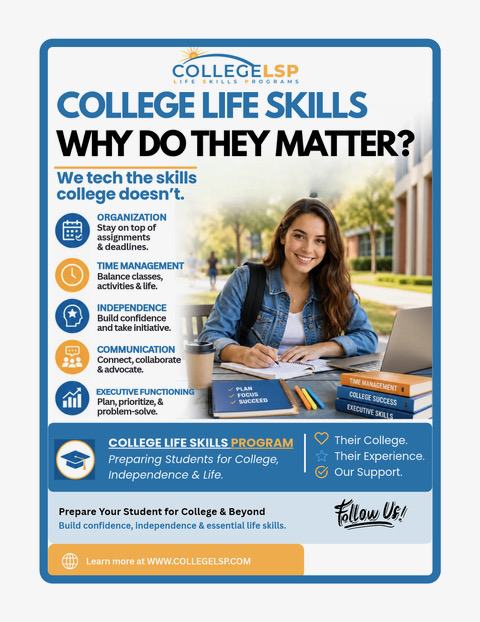
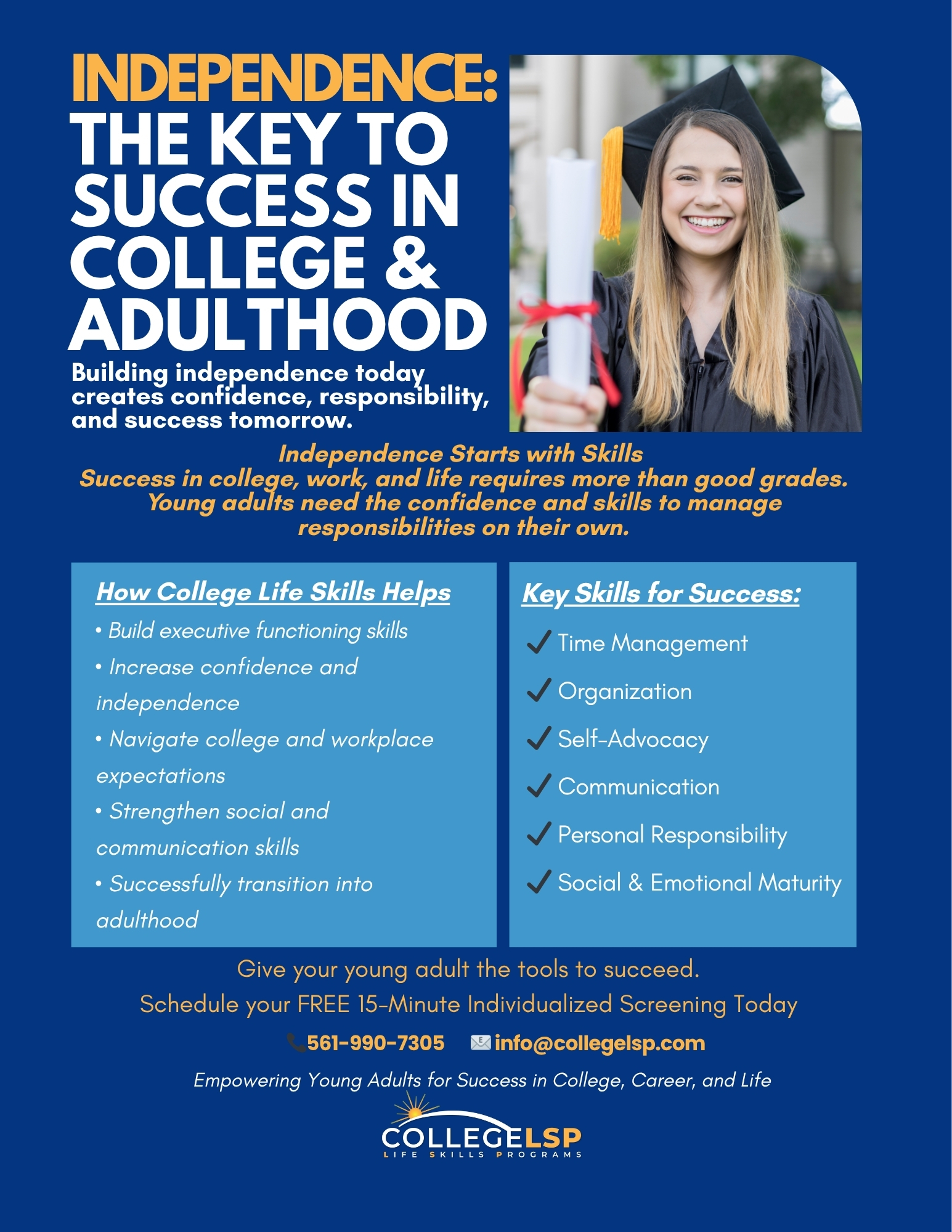
Our team of Doctoral and Master level professionals utilizes a series of highly individualized strategies, services, and techniques to help young adults who are college bound, in college, and even after college succeed in and after their transition into adult life. We help teach them skills such as finishing what matters so they can be successful in the real and work world, help them learn how to balance independent life on their own, and other life, executive functioning, social skills, and emotional maturity. If your young adult is struggling with the transition into college and adulthood, CollegeLSP has the tools to aid them in achieving and generalizing such skills.
Click here and call now to schedule your FREE 15-minute individualized screening.
Dr. Eric J. Nach, Ph.D., M.Ed., A.S.D.C., is a Developmental and Behavioral Specialist who specializes in Autism, ADHD and related disorders. Dr. Nach is the founder of the College Life Skills Program where he and his team of professional’s help develop the Emotional Maturity, Executive Functioning, Life Skill and Social Abilities of college students and those high school students preparing for college. The CollegeLSP is a subsidiary program of the Support For Students Growth Center, located in Boca Raton, FL and providing services nationwide
Contributors, N. E. (2026, March 16). Helping students overcome procrastination. National University. https://www.nu.edu/blog/helping-students-overcome-procrastination/